Let's start where you actually are
Body disconnection is real, and it's not something you fix with willpower. It's what happens when your brain and body stop talking to each other. Maybe you've been stressed for years. Maybe there's been trauma. Maybe you just got so used to powering through everything that you forgot how to feel at all. Whatever the reason, you ended up here. And here is where we start.
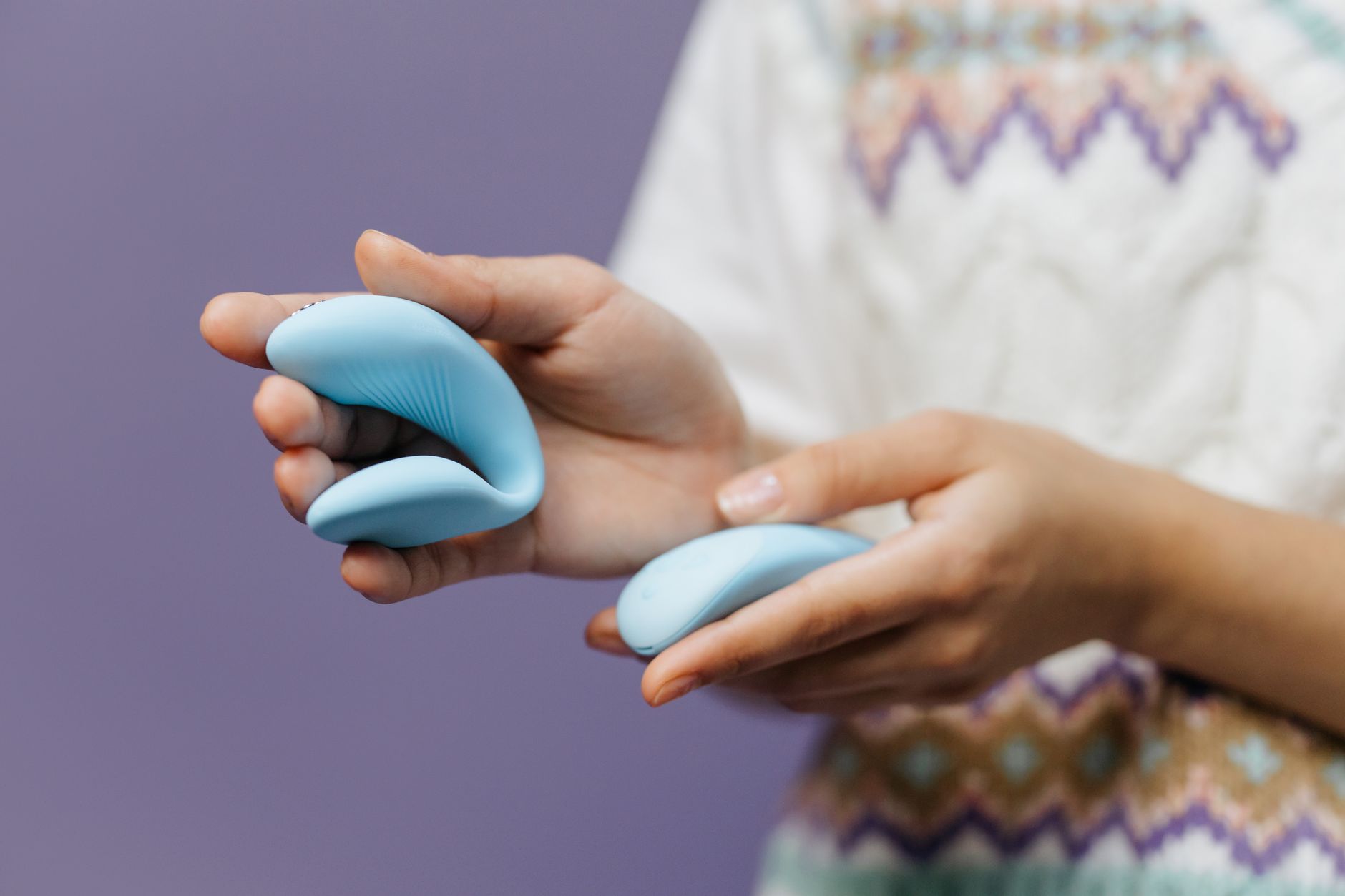
Reconnecting with your body isn't mystical. It's not about chakras or breathing your way to enlightenment. It's about systematic, gentle reintroduction to sensation. A lemon clitoral vibrator can be part of that process. Not the whole thing, but a reliable, predictable way to wake up nerve endings that have been asleep.
Why disconnection happens (and why it's not laziness)
When you're in survival mode, your brain deprioritizes pleasure signaling. It's actual neurobiology. Your vagus nerve, which connects your brain to your whole nervous system, downregulates sensation as a protective move. Sex feels numb. Touch feels like pressure. Your body stops sending pleasure signals because at some level, your system decided pleasure wasn't safe.
That's why reconnection takes time. You're not broken. Your body was doing its job. The work now is signaling to your nervous system that it's safe to feel again.
This matters because if you try to jump straight into intense sensation without rebuilding that baseline trust, you'll activate the same protective shutdown. The goal is the opposite. You want to start small, stay consistent, and let your nervous system gradually recalibrate.
The setup that actually matters
Here's what I recommend to clients who are starting from disconnection:
Environment first. You need a space where you feel completely safe and won't be interrupted. Not "probably fine." Actually safe. Lock the door. Put your phone in another room. Set a timer if it helps (15-20 minutes is plenty for the first month). Safety isn't luxury. It's the foundation that lets your nervous system relax enough to feel anything at all.
Start clothed. I know that sounds weird, but it works. Keep your underwear on for the first few sessions. This creates a buffer between full vulnerability and where you actually are right now. It's not about shame. It's about pacing. You're retraining your body to accept sensation, and sometimes the smallest barrier makes the difference between "this feels safe" and "this feels like too much."
Choose a low-stimulation pattern. Most lemon vibrators have multiple settings. Use pattern 1 or 2. The goal isn't orgasm. It's sensation. You're teaching your nervous system: "This is what stimulation feels like. It's safe. Nothing bad happens." Intensity comes later, if you want it.
A session structure that rebuilds trust
Here's what a reconnection session looks like, step by step.
Minute 1-3. Arrival. Lie down. Let your breathing settle. You're not doing anything yet. This sounds wasted time. It's not. You're signaling to your body that this time is intentional, separate from the rest of your day. Your nervous system needs a transition.
Minute 4-6. External exploration. Turn on your lemon vibrator at the lowest setting. Keep it over your underwear. Move it slowly around the area. Outer thigh, hip bone, anywhere but the vulva itself. You're building anticipation and desensitizing your nervous system to the vibration sensation. You'll probably feel almost nothing. That's normal.
Minute 7-12. Slow approach. Move the vibrator to the outer labia, still clothed, still the lowest setting. Stay here. The goal is to notice what you feel without judgment. Pressure. Vibration. Maybe numbness. All of those are data, not failure. If you feel a sensation shift—anything changes—pause and notice it. That shift is your nervous system waking up.
Minute 13-15. Rest. Turn off the vibrator. Let yourself lie still. This is crucial. Rest teaches your body that sensation doesn't lead to pressure or performance. You can just... stop. Feel the absence of vibration. Notice your heartrate. That is reconnection happening.
After. Don't jump up. Don't check your phone. Spend 5 minutes just being in your body. Can you feel your hands? Your feet? That grounding is what rewires the disconnect.
What happens in week two and beyond
After you've done this basic session 3-4 times, your nervous system starts recognizing the pattern. "This is coming. It's safe. I can open up a little." Then you introduce variation.
Week two: Move to skin contact. Remove your underwear, but keep the vibrator over the outer labia for the first 5 minutes. Then, very slowly, move to the inner labia. Low setting. Slow movement. The goal is still sensation building, not climax.
Week three: You might start noticing moisture. That's not the goal, but when it happens, it means your body is starting to trust again. Don't chase it. Let it happen on its own timeline.
Week four: Start experimenting with slight pressure changes. Press the vibrator a bit more firmly. Move it more deliberately. See if you can build sensation that lasts. Many people in reconnection mode find that sensation disappears quickly because their nervous system is still protecting them. That's okay. You're training it to sustain.
When numbness persists (and what it means)
Some people work through this process and still feel almost nothing. That's information. It usually means one of three things.
One, you need more time. Some nervous systems take 6-8 weeks to recalibrate. Impatience here defeats the purpose.
Two, there's something deeper—trauma, pain history, medications that affect sensation. This isn't a failure of the process. It means you might benefit from working with a therapist alongside the physical reconnection work. Those two things together move faster than either alone.
Three, you're holding tension in your pelvic floor. When you're disconnected, your pelvic floor often mirrors that. You're clenching without realizing it. The lemon vibrator can help, but you might also benefit from learning to actively relax your pelvic floor. Progressive relaxation is learnable. It takes practice.
When you do feel something (which matters more than orgasm)
The first time you notice actual sensation—tingling, pressure, a shift in sensation—that's a moment. Note it. Your body is coming back online.
The first time you feel pleasure—even small, even 5 seconds of actual good-feeling sensation—that's significant. You don't need to do anything with it. Just acknowledge it. Your nervous system is healing.
Orgasm will come back if and when your nervous system is ready. Right now, that's not the metric. Sensation is the metric. Consistency is the metric. Showing up and building trust is the metric.
A note on partnership (if there is one)
If you're doing this work alongside a partner, tell them what you're doing. Not in graphic detail. Just "I'm spending time rebuilding my connection with my body. It might take a few weeks. I'm not looking for anything from you right now. I just need you to know this is happening." Most partners understand. Some feel protective when they understand reconnection is the work, not performance.
When you're further along—maybe 4-6 weeks in—you might invite your partner to be present. Not to participate. Just to be in the room while you explore. Presence, without demand, is often the bridge back to partnered touch.
The patience piece nobody mentions
Your body disconnected over months or years. It will reconnect on its own timeline, which is rarely "this month." That's not failure. That's healing. You're not trying to "fix yourself fast." You're trying to build a relationship with your body that lasts. That takes time, and that is entirely worth it.
If you're looking for additional guidance on rebuilding pleasure after different life transitions, how to use a lemon vibrator when you feel disconnected from your body offers complementary strategies. For those working through specific barriers, how to use a lemon vibrator when you have tender tissues and need gentle stimulation addresses physical sensitivity.
FAQ
How long does it take to feel sensation again after disconnection?
There's no fixed timeline. Most people notice small shifts in sensation within 2-3 weeks of consistent practice. Deeper reconnection—where pleasure feels reliable and present—often takes 2-3 months. Some people need 6 months. Your nervous system will move at its own pace. Consistency matters more than speed.
Is it normal to feel nothing at all when you first use a lemon vibrator during reconnection?
Completely normal. Many people starting from disconnection report feeling vibration as pressure or just... nothing. That's your nervous system protecting itself. Keep going. You're laying groundwork even when you feel nothing. The rewiring happens underneath sensation you can't yet detect.
Should I try to have an orgasm during reconnection, or should I avoid it?
If an orgasm happens naturally, enjoy it. Don't chase it. The pressure to climax often reinforces disconnection. Relax into sensation. Let pleasure build however it wants to build. Your job is showing up and noticing, not forcing an outcome.
What if I feel triggered or anxious when I use a lemon vibrator during reconnection work?
Stop. Let your nervous system settle. Triggering isn't failure. It's information that you're touching something deeper. You might need to work with a trauma-informed therapist alongside solo exploration. That's not a detour. That's smart pacing. Some people benefit from how to use a lemon vibrator when you're nervous about pleasure after trauma as a companion resource.
Can I use other types of touch alongside lemon vibrator work during reconnection?
Absolutely. Gentle self-massage, warm baths, stretching. Anything that builds body awareness helps. Just keep it gentle. The point is rebuilding safety in your nervous system, not intensity.
Do I need to tell my partner what's happening during reconnection work?
If you live with someone or have a partner, transparency helps. You don't need graphic detail. "I'm doing some solo work to reconnect with my body" is enough. It prevents misunderstanding and often builds intimacy by showing vulnerability and intentionality.