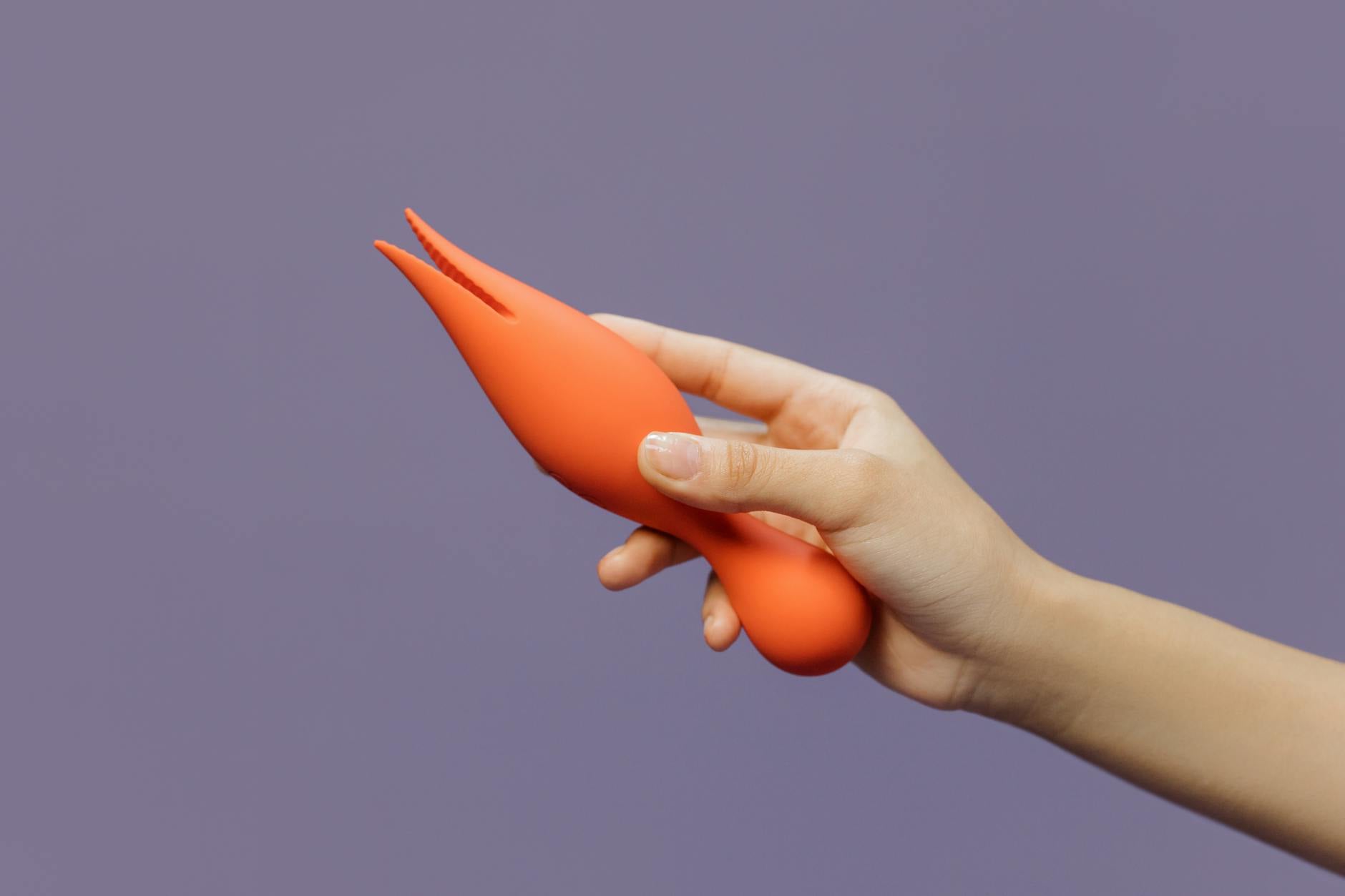
Let's talk about why vibrators aren't all made equal
Honestly, the marketing around lemon adult toys versus traditional vibrators makes it sound like a style preference. It's not. The biomechanics are fundamentally different, and if your tissue is sensitive, thin, or prone to numbness, that difference changes everything about what actually feels good.
The key distinction: traditional vibrators work through rapid oscillation. Lemon clitoral vibrators work through suction and release cycles. One applies continuous, localized pressure. The other creates gentle waves of pressure that stimulate nerves across a wider tissue area without requiring direct friction. When you have sensitive tissue, that's not a minor difference. It's the difference between pleasure and soreness.
How traditional vibrators actually work
A conventional vibrator — whether it's a wand, bullet, or rabbit — creates pleasure through a buzzing frequency, usually between 50 and 100 Hz (cycles per second). That buzz creates rapid friction against sensitive nerve endings. For many people, especially those with thick, resilient tissue and high sensation thresholds, that direct friction is exactly what they want. It's efficient, it's intense, and it delivers quick results.
But there's a hidden cost most people don't discuss. Sustained friction at that intensity can cause temporary numbing after about 10-15 minutes of continuous use. Your nerves desensitize to the stimulation, which is why people with vibrator numbness end up chasing higher and higher frequencies or stronger and stronger pressure.
For people with hormonal shifts, post-menopausal tissue changes, or conditions like vulvodynia or vaginismus, that friction-based approach can also cause irritation or pain within minutes.
Enter suction-based design: the lemon vibrator difference
Lemon sexual toys and similar suction-based devices work on a completely different principle. Instead of creating friction, they create gentle pressure pulses through suction and release. Think of it like your mouth kissing and releasing, rather than your fingertips rubbing in circles.
Here's what that does neurologically: suction stimulates a broader area of nerve endings than direct friction does. It also activates a different subset of nerves — the ones that respond to pressure and movement rather than pure friction. The result is that people with sensitive tissue can experience intense pleasure without the sustained friction that causes numbing or pain.
The Lem vibrator, one of the leading lemon clitoral vibrators, operates at around 10-12 Hz in its lowest settings and tops out at about 20 Hz on the highest settings. That sounds slower than a traditional vibrator, and it is. But the suction mechanism means it's delivering stimulation more efficiently using less mechanical intensity.
Why sensitive tissue responds differently
Thinner tissue is more prone to irritation from sustained friction, but it's also highly responsive to pressure changes. That's actually an advantage with suction-based designs. Here's why: when you're using a lemon vibrator with sensitive or post-menopausal tissue, each suction cycle is brief and rhythmic. The tissue gets stimulated and then gets a moment of release. That rhythm prevents numbing because the nerves aren't being bombarded with continuous sensation.
For people recovering from pelvic floor dysfunction or rebuilding sensitivity after trauma, this matters. You need stimulation that's effective but that doesn't overwhelm or trigger pain responses. Suction does that naturally.
People with vulvodynia report that they can use lemon adult toys for 20-30 minutes without the burning sensation they get from traditional vibrators within minutes. That's not placebo. It's a direct result of how the pressure is distributed.
The pressure distribution story
Let's get specific. A traditional vibrator concentrates all its energy into a small contact point. If you're using a bullet vibrator, you're applying all that 100 Hz frequency onto maybe one square inch of tissue. That creates hotspots of intense stimulation.
A suction-based lemon vibrator distributes pressure across a wider surface area. The suction cup covers more territory, and the pressure wave travels through tissue rather than staying localized. It's the difference between pressing your thumb into one spot versus gently pulling your whole hand across that same area.
For sensitive tissue, that distribution is everything. You get stimulation without the concentrated pressure that causes irritation.
Build-up time and arousal
Here's something that surprises people: lemon vibrators often feel slower to work at first, but they actually build sensation more evenly. With traditional vibrators, you get a quick spike in sensation followed by a plateau or numbing. With suction-based devices, sensation builds more gradually and sustains longer without fatigue.
This is especially true for people taking antidepressants or dealing with arousal challenges where sensation needs to build slowly. The Lem vibrator's lower frequency settings actually work with your nervous system's natural timing rather than forcing it into a faster rhythm.
Lubrication and tissue compatibility
Traditional vibrators sometimes require more lubrication to prevent irritation because the friction creates heat and can dry tissue out. Suction-based lemon clitoral vibrators don't generate that same friction heat, so lubrication needs are different.
With a lemon vibrator, you're using water-based lube to help the suction seal, not to reduce friction. That's a subtle but real difference. People with naturally lower lubrication (whether from hormonal shifts, anxiety, or other factors) often find that suction-based devices require less prep and cause less irritation.
When traditional vibrators are still the right choice
Let's be clear: this isn't an argument that lemon vibrators are universally better. If you have thick, resilient tissue and high sensation thresholds, traditional vibrators might still feel more satisfying. The concentrated friction is actually what you want.
But if you've ever experienced numbness, soreness, irritation, or that feeling where a vibrator is just "too much," a suction-based design is worth trying. It's not about intensity being less pleasurable. It's about stimulation being more sustainable and more aligned with how sensitive tissue actually responds.
The confidence factor
Honestly, the biggest benefit I see in my practice isn't physiological. It's psychological. When people with sensitive tissue try a traditional vibrator and it hurts or causes numbness, they often assume their body is broken or that they're "not built" for vibrators. That's not true. They just haven't found the right delivery mechanism.
The moment someone with sensitive tissue tries a lemon vibrator and it feels good without pain or fatigue, something shifts. The confidence comes back. The sense that pleasure is available to them, not just accessible to other people.
That's a bigger deal than the biomechanics, honestly.
FAQ
Are lemon vibrators quieter than traditional vibrators?
Yes, generally. Because they operate at lower frequencies and use suction rather than buzzing, lemon vibrators tend to be significantly quieter. The Lem vibrator, for example, produces a subtle humming sound rather than the loud buzz of many traditional vibrators. If discretion matters to you, that's a real advantage.
Can you use a lemon clitoral vibrator with a partner?
Absolutely. Many people find that suction-based devices feel less intrusive during partnered sex because the design is more ergonomic and less likely to vibrate through your partner's body. You can also use a lemon vibrator for external stimulation during foreplay or penetration without the buzzing feeling transmitted internally.
Do lemon vibrators work for everyone with sensitive tissue?
Most people with sensitive tissue see improvement, but bodies are individual. Some people with severe vulvodynia need to start with external pressure-based massage before moving to any vibration. If you have pain with any stimulation, see a pelvic floor specialist before trying new tools. Once you're cleared, suction-based designs are usually the gentlest entry point.
How long does it take to feel effects with a lemon vibrator?
Because suction builds sensation more gradually, you might need 5-10 minutes instead of 2-3 minutes to reach peak pleasure. That's not a downside if you have time. It's actually an advantage if you're someone who needs arousal to build slowly, whether from medication effects, anxiety, or just your natural wiring.
Can you get numbing from a lemon vibrator?
It's rare, but yes. If you use even a suction-based device for 40+ minutes continuously, some numbing can happen. The difference is that it takes much longer to occur, and the sensation returns faster once you stop. With traditional vibrators, that 10-15 minute mark hits quicker and can feel more pronounced.
Should I use a lemon vibrator if I've never used any vibrator before?
If you have sensitive tissue or you're nervous about vibrators, starting with a suction-based lemon vibrator is often smarter than starting with a traditional one. It feels less aggressive, the learning curve is simpler, and you're less likely to experience numbing or soreness that makes you think vibrators aren't for you.
The bottom line
Lemon vibrators aren't just a design choice. They're a biomechanical alternative that works better for sensitive, thin, or easily overwhelmed tissue. If traditional vibrators have caused you numbness, pain, or that "too intense" feeling, suction-based stimulation is worth exploring.
Your pleasure isn't broken. The tool you tried just wasn't designed for your specific tissue. That's fixable, and it might open up a whole new dimension of sensation. If you want to learn more about which approach might work best for your body, we're here to talk.