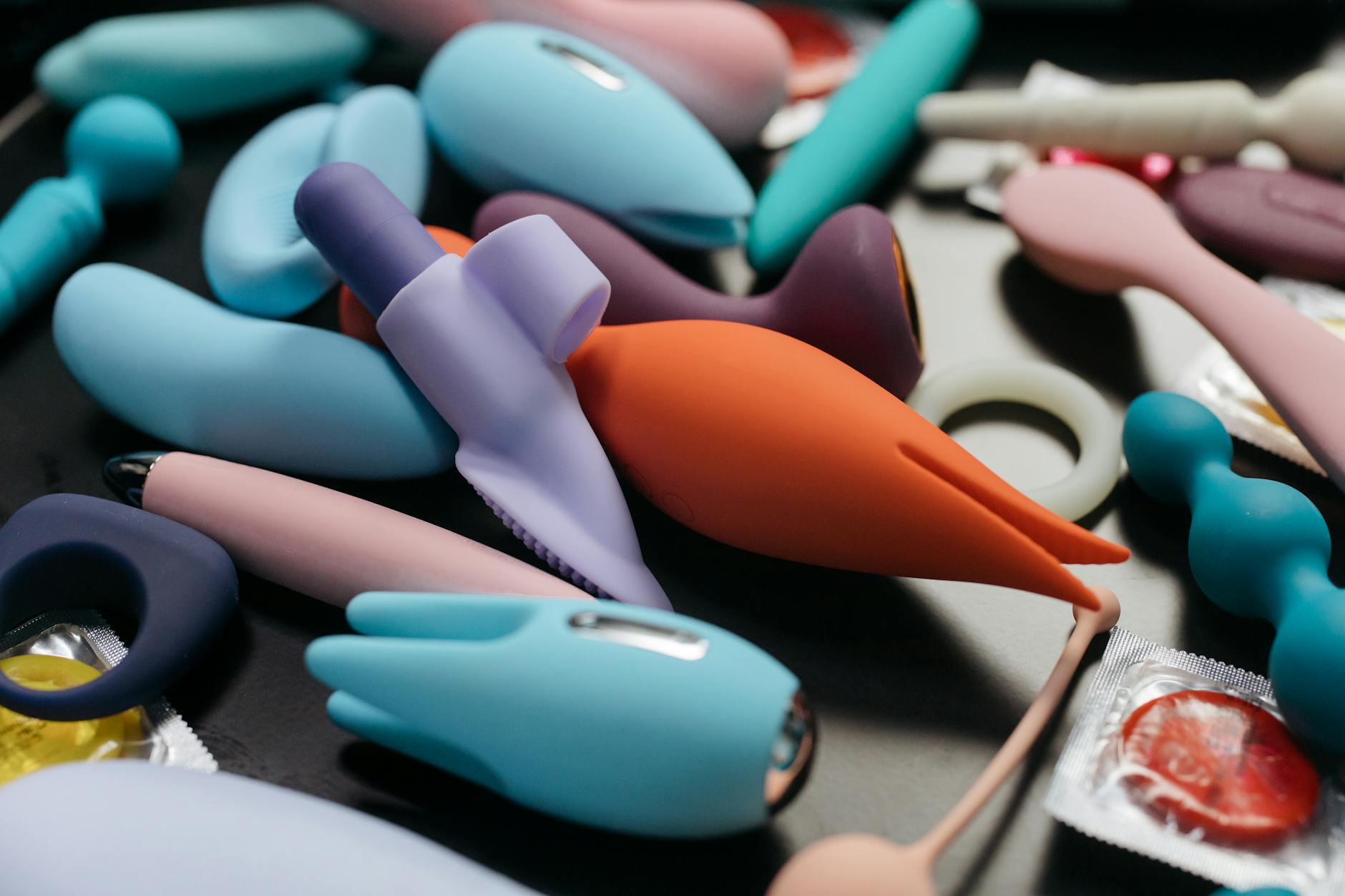
The arousal timeline gap is real, and it's not about desire
Here's the thing: one partner is ready. The other is still settling in. You check the clock. Five minutes in, your body is primed, but theirs is just starting to warm up. Ten minutes later, you're either tamping down your own arousal or, worse, feeling resentful about the wait. They sense the impatience. Suddenly sex feels like a project instead of a dance.
This is one of the most common friction points in long-term partnerships, and it has almost nothing to do with whether both people actually want to be there. It's physiology. Arousal timelines vary wildly, and when one partner consistently gets ready faster than the other, the slower partner often starts to feel like they're holding up the show.
A lemon clitoral vibrator changes the equation entirely. Not by making anyone rush, but by creating a solution where both people's bodies can be engaged at the same time, on their own timelines.
Why arousal timing matters more than you think
When arousal is mismatched, the faster partner has three bad options: pretend they're not ready (exhausting), wait and lose momentum (frustrating), or push forward while the other person is still catching up (breeds resentment). The slower partner feels pressure to speed up, which is physiologically impossible.
Over time, this creates a feedback loop. The faster partner learns to suppress their arousal. The slower partner feels guilty. Sex becomes transactional instead of connective. Both people end up less satisfied, even if the sex itself is technically fine.
What gets missed is that this isn't a compatibility problem. It's a coordination problem. And it has a solution.
How lemon vibrators solve the timing gap
A lemon clitoral vibrator lets the faster partner get stimulation while the slower partner is still in their own arousal process. You're not waiting for them to catch up. You're not asking them to rush. You're both present, both engaged, both building toward the same moment. Just on different timelines.
The suction pattern of a lemon vibrator is different from traditional vibration. It doesn't require the constant friction that numbs over time. So the faster partner can use it earlier in foreplay, at lower intensities, without losing sensation by the time penetration actually happens.
Meanwhile, the slower partner can focus entirely on their own arousal. No guilt. No audience. Just the time and space their body actually needs.
Starting the conversation without making it weird
If you've never used a toy in your partnership, introducing one requires a light touch. The conversation isn't, "Your arousal is too slow." It's, "I want more time with you, and I want us both to feel good. Can we try something that helps with that?"
Make it about addition, not substitution. Not, "You're not enough." But, "Let's both get more."
If your partner has been resistant to toys in the past, start smaller. Watch a video together. Look at the product together. Let them hold it, turn it on. Normalize it before it shows up in the bedroom.
The practical rhythm
Here's a realistic way to use this:
Early foreplay (minutes 1-5): You're both kissing, touching. The faster partner might already be thinking about what comes next. The slower partner is still in the warm-up phase. This is fine.
Middle phase (minutes 5-15): The faster partner introduces the lemon vibrator on themselves during continued foreplay. Oral, manual stimulation, whatever you're already doing. They're keeping themselves engaged. The slower partner is reading their partner's arousal as feedback about what to do next.
Later phase (minutes 15+): Both partners are fully aroused, on their own timelines. The vibrator might come back, might not. The point is, you got there together, without anyone feeling rushed or left behind.
The magic part: once the slower partner sees the faster partner using the toy without shame, without it being about them, they often become curious. They want to try it. And suddenly you have a new language for pleasure that benefits both of you.
What this actually fixes
A few things shift pretty fast:
You stop resenting each other. The faster partner stops feeling like they have to suppress arousal. The slower partner stops feeling guilty for needing more time. The friction isn't about each other. It's a problem you're solving together.
Foreplay gets longer, not shorter. Most partnerships have a habitual foreplay length because the faster partner gets impatient. With a toy in play, foreplay can actually extend naturally, because the faster partner isn't bored. The slower partner isn't rushed.
Connection deepens. Using a toy together, watching your partner experience pleasure, even just being present while they use one. It's intimate in a different way than most people expect. Less performative. More honest.
Sex becomes more reliable. When both partners are fully aroused before penetration starts, everything works better. Fewer logistics problems. More natural lubrication. Better sensation. Real orgasms, not just surface pleasure.
Common worries, addressed
Will it make penetration feel competitive? No. The vibrator isn't replacing anything. It's enabling everything that comes after to feel better because both partners actually got to finish their own arousal process.
What if my partner feels replaced? This is the most common fear. The answer is simple: make sure they understand this is about them, about both of you. Start by saying, "I want you to feel as good as possible. Help me figure out how to make that happen."
Does it take the romance out of it? Only if you think sexuality has to be effortless and intuitive. Real sexuality in long-term partnerships is about problem-solving. It's about caring enough to figure out how to both feel good. That's more romantic than pretending mismatched timelines don't exist.
What if we've been doing this the same way for 10 years? Change is weird. But change is also how couples stay connected. Trying something new, even something small, signals that you're both still interested in each other's pleasure. That's what keeps things alive.
A note on communication after you try it
The first time probably won't be perfect. You might feel self-conscious. Your partner might be unsure. That's normal.
The second time is where the real data comes in. That's when you can ask, "What actually felt good about that?" Not for critique. For understanding. You'll learn things about each other's bodies and preferences you didn't know.
This is the actual benefit: not the vibrator itself, but the conversation it opens up.
Why arousal matters for longevity
Couples who stay satisfied long-term are couples who figure out how to both feel good. Not just during sex. But during the entire experience. From the moment foreplay starts to hours afterward.
Mismatched arousal timelines are one of those things that looks small until it's not. One year of the faster partner feeling impatient, the slower partner feeling guilty, and you're having less sex. Two years and you're both initiating less. Three years and you're wondering why sex feels obligatory.
A lemon clitoral vibrator is a tool. But it's also an opening for a different conversation. A conversation where you both actually get to finish your own arousal process. Where neither of you is waiting or rushing. Where pleasure is the point.
FAQs: Arousal timing and toys
Should I use a lemon vibrator every single time we have sex?
No. The point is to have it available when you need it, not to make it the default. Some nights one partner is just faster than the other. Some nights you're both on the same timeline. This is just another tool for the nights when you're not.
What if we try it and it feels awkward?
It will, a little. The first time you use anything new in a partnership feels weird. Give it two or three times before you decide whether it actually works for you. Awkwardness is usually just unfamiliarity, not incompatibility.
Can I use a lemon vibrator if I'm the slower-arousing partner?
Absolutely. Some slower-arousing partners find that using a vibrator on themselves, while their partner stimulates them in other ways, actually speeds up their arousal process. It's one more input, one more sensation. Your body might respond to that.
My partner says they don't want a toy involved. What do I do?
Respect that boundary. But also ask why. Is it about toys in general, or about this specific situation? Is it insecurity? Is it a religious or personal value? Understanding the real objection matters, because the solution might be something else entirely. Sometimes it's not a vibrator that's needed. Sometimes it's just more foreplay, or a different time of day, or less pressure overall.
Does using a toy mean we're not attracted to each other anymore?
Nope. It means you care enough about each other's pleasure to problem-solve instead of just accept mismatched timelines. That's actually a sign of a healthy partnership.
How do I bring this up without sounding like I'm criticizing their arousal speed?
Frame it around your own pleasure. "I want more time together, and I want us both to feel amazing. I had this idea." Not, "You take too long." But, "I want us both to get there together."
Will a lemon vibrator help if our arousal gap is really extreme?
It helps a lot. But if one partner is taking 45 minutes and the other is ready in 5, there might be something else going on. Low desire. Hormonal changes. Medication side effects. Stress. A toy helps with coordination. But it might not be the full answer. Consider talking to a therapist or doctor if the gap is severe.
Should I use lube with a lemon vibrator during partner sex?
Yes. Water-based lube, so it doesn't damage the silicone. And it feels better. The suction-based stimulation of a lemon vibrator doesn't require friction the way traditional vibrators do, but lube still enhances sensation and comfort.
Can we both use the same lemon vibrator, or do we need separate ones?
You can share. Wash it between uses. But if you're using it simultaneously on each other, or if you're both going to want it during solo sessions, having two makes things easier. It's not a hard rule, just practical.
The bottom line
Arousal timelines matter more than most couples admit. One person ready early, the other needing more time, and suddenly sex feels like a negotiation instead of a connection. A lemon vibrator doesn't fix the underlying difference. It just creates a space where both timelines can coexist.
You're both aroused. You're both present. You're both getting what your bodies actually need. That's the shift. That's what makes sex feel like something you're doing together, not something you're doing around each other.
If arousal timing is a friction point in your partnership, try this. Start small. Talk about it before, and again after. See what actually helps. Then build from there. Most couples find that solving one coordination problem opens the door to solving the others. And suddenly sex stops being something you're managing and starts being something you're both excited about again.
For more on using toys with a partner, check out how to use a lemon vibrator with a partner during foreplay. Or if your partner has been resistant to toys altogether, introducing a lemon clitoral vibrator when your partner is resistant walks through a gentler approach.
Sources
Research on arousal timing differences and long-term relationship satisfaction has been documented in the Journal of Sex and Marital Therapy. Gottman Method research on sexual satisfaction in committed partnerships emphasizes the importance of emotional attunement and synchronized pleasure, both of which are compromised when arousal timelines consistently mismatch. Relationship therapists including the Gottman Institute emphasize that sexual coordination is as important as emotional intimacy in sustaining long-term connection.