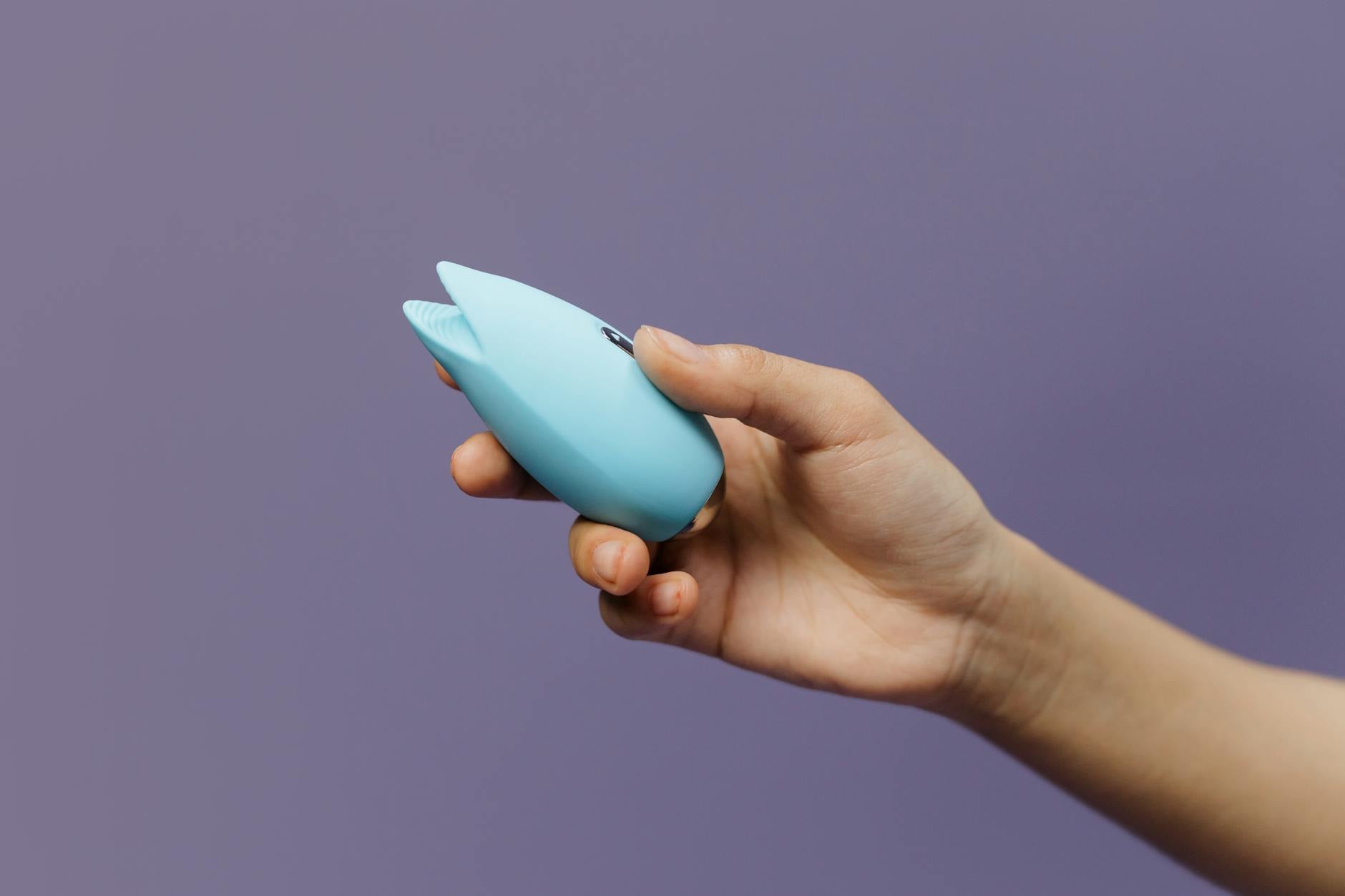
Why My Lemon Vibrator Feels Different After Menopause
Here's what's actually happening
You pull out your trusted lemon clitoral vibrator, the one that's worked perfectly for years, and something feels off. Maybe it's numb. Maybe it's sharp. Maybe you need more intensity than you used to, or less. Your first thought: the toy broke, or I broke, or something is wrong with me.
None of those are true. What's happening is biochemistry, and it's completely normal.
During menopause, estrogen levels drop significantly. This shift touches nearly every tissue in your vulva and pelvic floor, including the sensitive nerve endings that make a lemon vibrator or any clitoral vibrator feel like something. You're not losing sensation permanently. You're experiencing a temporary recalibration of how your body processes touch.
The tissues that change
Let's get specific about what estrogen does. It keeps tissue thick, elastic, and well-supplied with blood. When estrogen drops, the vulvar tissue thins. The vaginal tissue follows suit. This is called genitourinary syndrome of menopause (GSM), and it affects roughly 50 percent of women going through the transition.
Thinned tissue is more sensitive to certain kinds of stimulation and less responsive to others. This is why your lemon vibrator, which relied on a particular density of tissue to transmit vibration effectively, might feel different now. It's not weaker. It's redistributed.
Your pelvic floor muscles lose some of their estrogen-dependent tone as well. This can change the architecture of arousal. Instead of a deep, full-body response that builds gradually, some people experience more localized, quicker peaks. Others find their orgasms are sharper and more concentrated. Neither is better or worse. They're just different.
Photo by SHVETS production on Pexels
Why intensity settings feel weird now
Many people report that their go-to setting on a lemon vibrator suddenly feels too intense. Why? Thinner tissue has less cushioning. The vibration, which used to disperse across a thicker layer, now reaches nerve endings more directly. It's like turning up the volume on a speaker and suddenly the bass is in your chest instead of filling the room.
Others say the opposite: they need more power than they used to. This typically means the tissue has thinned enough that moderate vibration isn't creating sufficient pressure against the sensitive structures underneath. You're not losing sensitivity. You're losing the buffering effect.
The fix isn't usually to abandon your lemon vibrator or clitoral vibrator of choice. It's to start with lower patterns and work up, or to experiment with adding lubricant, which can act as a buffer and help distribute sensation more evenly.
Why lubrication matters more now
Estrogen supports natural lubrication. When it drops, you produce less. This is the part everyone knows about, but here's what's less talked about: commercial lubricant does more than reduce friction. It changes how vibration transmits through tissue.
Water-based lubricant acts as a conductor. It helps the vibration spread more evenly, rather than concentrating at the point of contact. For people using a lemon sucker or any suction-based clitoral vibrator, lubricant actually enhances the seal and can make the sensation more pleasurable, not less.
If you've been using your Hello Nancy toy dry, or with minimal lubricant, a generous amount of high-quality water-based lube might restore the sensation you're missing. It's not a workaround for a broken body. It's giving your toy the medium it was designed to work with.
The pleasure map shifts, too
Here's something I've noticed across years of working with couples navigating menopause: the areas that feel most responsive can shift. The clitoris is still there, still capable of intense sensation. But if that's been your primary focus for orgasm, you might notice that surrounding tissue, the vestibule, the lower vagina now registers sensation more vividly.
This isn't a loss. It's an expansion of the map. Some people who've always relied on direct clitoral stimulation find that blended stimulation, something like a combination toy or a lemon vibrator used alongside internal pressure, creates a more multidimensional experience than they've had before.
The nervous system is plastic. It rewires in response to hormonal change. This can actually be an opportunity to explore sensation you've never noticed before.
The paradox of desire
Here's the part that confuses a lot of people. Your ability to experience pleasure and orgasm doesn't disappear during menopause. Studies show that many people report their most intense orgasms in their 50s and beyond. But the path to get there can be different.
If your lemon vibrator used to get you there in five minutes and now it takes fifteen, that's not failure. That's a change in arousal timeline, often linked to reduced baseline estrogen and sometimes to shifts in attention or stress. Both are workable.
Mental state becomes more important post-menopause. Distraction, worry, and low-grade stress have a bigger dampening effect on arousal than they might have before. This is partly hormonal. It's also partly neurological. You're not broken. You're more sensitive to the conditions that make pleasure possible.
What actually helps
Four practical changes that make a real difference:
First, reconsider your warm-up time. Most of the people I work with who report satisfaction with their lemon vibrator or any clitoral vibrator post-menopause budget 15 to 25 minutes for arousal, not five. This isn't more foreplay. It's giving your nervous system time to downshift into pleasure mode.
Second, use lubricant generously. Not apologetically. A water-based product designed for this purpose, applied liberally, changes everything. Your tissue will thank you.
Third, start at lower intensities. If your lemon clitoral vibrator has pattern settings, begin at level one or two. You can always increase. Starting too high and backing down because it's uncomfortable teaches your nervous system to brace, which actually reduces sensation.
Fourth, consider your pelvic floor. Many people unconsciously clench during arousal, especially if early attempts post-menopause felt uncomfortable. Learning to consciously relax your pelvic floor as you approach stimulation can transform the experience. A pelvic floor physical therapist can guide this if you want professional support.
When to talk to a doctor
If you're experiencing pain during sex or masturbation, not just discomfort or numbness, schedule an appointment. Genitourinary syndrome of menopause is treatable. Topical estrogen creams work quickly and have minimal systemic absorption. Many people feel a difference within two weeks.
If desire has completely vanished, that's also worth investigating. Low testosterone can contribute to low libido during menopause, and there are options. A menopause-informed gynecologist or GP can run simple tests and discuss whether hormone therapy makes sense for you.
The pleasure is still there
Your lemon vibrator didn't stop working. You're experiencing a recalibration, not a loss. The sensations that used to arrive instantly might now require patience, lubricant, and a slightly lower starting intensity. But they're still there.
Many people I've supported through this transition report that once they stop expecting their bodies to respond the way they did at 30, and instead get curious about what feels good now, they discover that pleasure is actually deeper. The urgency is gone. The self-consciousness often lifts. And suddenly, a clitoral vibrator that felt routine becomes interesting again.
You deserve pleasure that fits your body as it is right now. Give yourself permission to experiment, adjust, and discover what works.
People also ask
Why does my clitoral vibrator feel numb after menopause?
Tissue thinning from lower estrogen reduces the cushioning around nerve endings. Vibration reaches nerves more directly, which can register as numbness if your settings are too low, or as oversensitivity if they're too high. Adding lubricant and starting with lower intensity patterns can help restore the sensation you're looking for. If numbness persists despite these adjustments, it's worth checking with a menopause-informed doctor to rule out other contributors like thyroid changes.
Can I still use my lemon sucker vibrator after menopause?
Absolutely. Many people find that suction-based clitoral vibrators like a lemon sucker are actually easier to use post-menopause than traditional vibrators, because suction distributes pressure differently and doesn't rely on the same tissue thickness. Start with lower suction levels and add lubricant around the edges of the cup for a better seal. Some people discover their strongest orgasms come from this kind of stimulation once they've adjusted their technique.
Should I switch to a different Hello Nancy toy after menopause?
Not necessarily. The toy itself is fine. What might change is how you use it. If you've been using your familiar lemon vibrator at high intensity with no lubricant and a quick warm-up, trying it with a five-minute build-up, generous lubricant, and a lower starting pattern might make it feel new again. That said, some people do find that exploring a different toy helps them discover sensations they hadn't noticed before. There's no rule here. Follow what feels good.
Does vaginal atrophy from menopause reduce orgasm strength?
Not automatically. Your capacity for orgasm is neurological, not just tissue-based. However, if tissue thinning is causing pain or discomfort, that fear of pain can dampen arousal and make orgasm harder to reach. This is why addressing genitourinary syndrome of menopause with topical estrogen or other treatments can actually improve sexual satisfaction. Once you remove the pain signal, many people find their orgasms return to their former intensity or shift into new patterns that feel equally satisfying.
How long does it take to adjust to how stimulation feels after menopause?
This varies. Some people adjust within weeks by switching their technique and adding lubricant. Others take a few months to fully recalibrate. The nervous system is slow to rewire. Give yourself at least two to three months of consistent, pleasurable exploration before deciding that something isn't working. Many people report that what felt strange at week two feels completely natural by week twelve.
Can HRT or hormone therapy change how my vibrator feels?
Yes. Estrogen therapy, whether systemic or topical, restores tissue thickness and elasticity. Many people report that sensations feel more familiar again once they're a few months into treatment. That said, you don't need hormone therapy to enjoy pleasure post-menopause. Plenty of people have deeply satisfying sex without it, using lubrication, adjusted technique, and pelvic floor awareness instead. The choice is personal and medical.
If you're navigating changes in your body and want to explore what works for you now, start simple. A trusted tool like your lemon clitoral vibrator, patience with yourself, and permission to adjust your approach can open up pleasure you haven't discovered yet. For more on how to use your toys intentionally, check out our guide to using a lemon vibrator with a partner, or read about why lemon vibrators work better after 40 to see how this transition actually creates new possibilities.
Your pleasure matters. Your body's evolution doesn't end it. It just changes the map. That's not loss. That's information.