Let's name the actual problem
Here's the thing. A lot of partnered sex is built around one person's pleasure arc. Usually that person is entering someone else's body, and their stimulation is handled by proximity and friction. Meanwhile, the person on the receiving end is expected to either climax from penetration alone or quietly reach down and handle it themselves. And if they do the second thing? Half the time it feels like a side quest their partner is tolerating, not genuinely participating in.
It's not malice. It's just inertia. Your partner knows what works for them. They're not actively thinking about what's missing from your experience because their nervous system is already occupied.
That's where a lemon clitoral vibrator changes the conversation. Not as a workaround. As an actual expansion of what you two can do together.
Why penetration-focused partners often skip clitoral touch
Three things are happening simultaneously, and none of them are personal.
First, penetration creates its own sensory feedback loop. Your partner's attention narrows because their body is literally receiving information that feels good. Adding a secondary action requires a cognitive shift most people haven't practiced. It feels like juggling when they're already focused.
Second, many people were taught early on that sex has a fixed script. Foreplay, then penetration, then done. Adding a lemon vibrator or other clitoral toy mid-session reads as a deviation from that template. They might worry it means penetration isn't enough, or that they're not enough. That worry lives quietly in the nervous system and shows up as avoidance.
Third, practical friction. If one person is inside another person's body, introducing a handheld toy changes the logistics of their own pleasure. Their hands are occupied. The angle shifts. They have to coordinate something they haven't rehearsed. So they don't try.
None of these are about your pleasure mattering less. They're about attention being finite and bodies needing a minute to adjust to new input.
The reframe that actually works
Let's separate two conversations that usually get tangled together.
Conversation A: "I'm not cumming from penetration alone, and I need clitoral stimulation." That's a fact about your body. It's biological, not a complaint about your partner.
Conversation B: "I want us to explore this together instead of me handling it solo." That's an intimacy request. It's about connection, not about your partner's adequacy.
Most couples jam both conversations into one sentence and it becomes a land mine. Your partner hears "you're not doing it right" when what you meant was "I want more of you in this part of my pleasure."
Frame it separately. Say something like: "I discovered that I need consistent clitoral touch to come, and I'd love to try a lemon vibrator together during sex. Not instead of what we're doing, but as part of it. I want you involved." That shifts it from a problem to solve to an experiment to try.
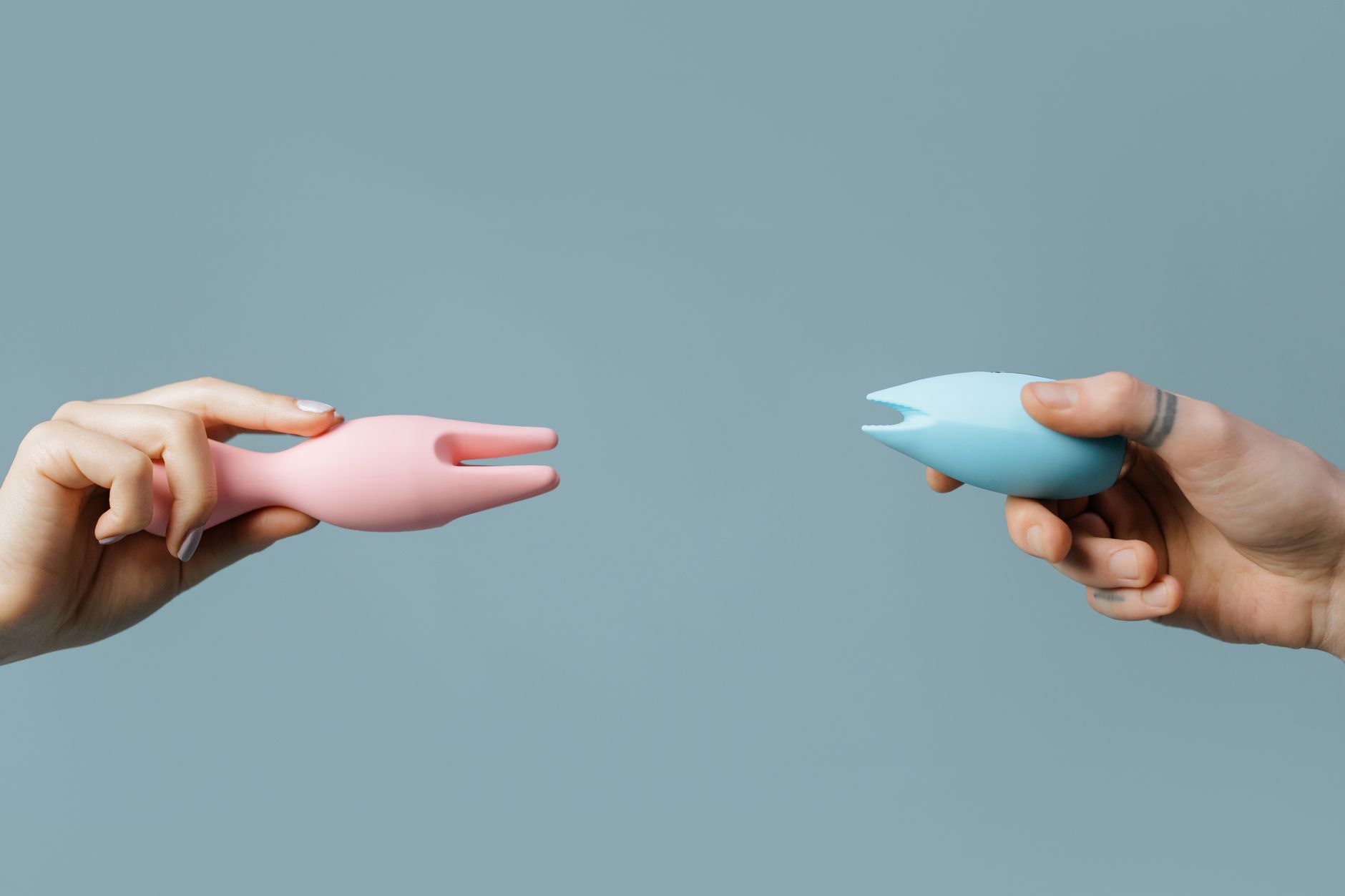
Photo by cottonbro studio on Pexels
How to introduce a lemon vibrator without it feeling like a pivot
Timing matters more than you'd think.
If you bring up the vibrator during sex, it reads as mid-course correction. If you bring it up outside of sex, it feels like a performance review. So talk about it in a neutral moment. "Hey, I found this thing I want to try with you. It's a lemon clitoral vibrator. Want to check it out this weekend?" Casual. Curious. Not urgent.
When you do try it, start with your partner watching you use it on yourself first. This does two things. It normalizes the toy in your shared space instead of it appearing suddenly during sex. And it shows your partner exactly what feels good and how much pressure you like. That's pure information transfer. They get to see your pleasure without performing it yet.
Then the next time, invite them to turn it on for you during foreplay while they're already touching you elsewhere. Not during penetration yet. Just during the warm-up. That way they're learning how to integrate the toy without managing their own arousal at the same time. Their brain has bandwidth.
Using it during penetration (the actual logistics)
Here's what actually works practically.
Your partner enters you. You're on your back or in any position where your hand can reach your clitoris. You bring out the lemon vibrator. You hold it against yourself at whatever angle and intensity feels right. Your partner continues their rhythm. You're doing two things at once, but neither of you is managing the other's tool.
That's the magic. They don't have to think about the vibrator. They focus on their own sensation and their connection to you. You manage your own clitoral stimulation the same way you would alone, except now someone you care about is also present and inside you. It's not a duet. It's parallel play. And somehow that changes everything.
If you want your partner more involved, they can hold the vibrator against you while thrusting. This requires coordination and honestly a bit of practice. The angle matters because if the vibrator is pressing too hard into your clitoris while they're moving, it can go from good to overstimulating fast. Start slow. Let them find the rhythm.
Alternatively, your partner can use the lemon vibrator on you before or after penetration. Bring you to the edge with it. Then move into penetration. Your nervous system is already activated, your blood is flowing to the right places, and that often makes penetration feel fuller. Sometimes the sequence matters more than doing everything simultaneously.
Navigating the emotional texture
Here's the part nobody talks about. Your partner might feel weird.
They might worry the vibrator is replacing them. They might feel like they're failing you if you need external stimulation. They might even feel less sexy. These feelings are normal and not based in truth, but they're real and they need addressing.
One approach: frame the vibrator as an amplifier, not a substitute. "This doesn't mean I don't enjoy what you're doing. It means I get to feel more of what I enjoy while you're here with me. You're the one making this possible." That's honest. And it shifts the toy from competitor to collaborator.
Another approach: emphasize what the vibrator lets you do differently together. "When I'm not spending mental energy trying to come from just penetration, I can actually be more present with you. I'm not up in my head about whether I'm taking too long. I'm here." That's also true. Presence is sexy. Presence is intimate.
If your partner is resistant, don't push. But do stay curious. Ask what specifically feels uncomfortable. Is it the toy itself? The idea that penetration alone might not be enough for you? Fear of judgment? Practical concerns about coordination? Different worries need different solutions.
When your partner wants to use it on you
This is often where the magic happens.
Your partner holding the lemon vibrator while they're thrusting changes the power dynamic in a good way. They're actively managing your pleasure in real time. They can feel when you tense up or respond. They can adjust. They're no longer on autopilot.
For your partner, this requires some focus. They're coordinating penetration with holding the vibrator at the right angle and speed. It's not passive. But a lot of people find that active participation in someone else's pleasure is actually more engaging than just doing their own thing.
The key is communication in the moment. "A little higher." "Keep that angle." "Slower." Your partner isn't a mind reader. The specificity helps them succeed.
And here's what often happens. Once your partner realizes that adding clitoral stimulation makes you come faster and harder, they often become protective of the vibrator. "Wait, where's the lemon vibrator? We need that tonight." Suddenly it's not a workaround. It's part of your shared toolkit.
Managing the logistics of lube and materials
One practical thing: make sure your lube is compatible with your vibrator.
If you're using a silicone toy, silicone lube will degrade it over time. Water-based or hybrid lubes are safer. Check the toy's care instructions. This matters because if the vibrator breaks down mid-session, the whole vibe gets disrupted.
Also, with a partner inside you and a vibrator against your clitoris, things can get slippery. The vibrator might slip or lose contact. Keeping it pressed against skin requires a little more pressure than solo play. Your angle might need adjusting mid-session. Build in a beat where you can pause, reset, and continue. That pause isn't a failure. It's maintenance.
What happens after you both get comfortable
Something shifts when a couple integrates a tool like a lemon vibrator into partnered sex.
It stops being about the vibrator and becomes about trust. Your partner trusts that you know your body. You trust that they're genuinely interested in your pleasure. That's deeper than the toy itself.
Often, couples who start using a lemon clitoral vibrator during partnered sex end up talking differently about pleasure in general. They ask more questions. They pay more attention. The vibrator was the permission structure to actually discuss what feels good instead of assuming.
And sometimes, partners who were penetration-focused start naturally reaching for clitoral stimulation without the toy involved. Once they understand that it's a thing you need and that you respond to it, the toy becomes optional. The habit remains.
People also ask
Will a lemon vibrator make my partner feel inadequate during sex?
Not if you frame it right. The vibrator isn't replacing them. It's complementing what you're already doing together. A helpful analogy: a massage chair doesn't make a massage therapist obsolete. It's a different experience. When you position the vibrator as something you want to try together, it becomes collaborative, not competitive. Your partner's role shifts from being the sole source of your pleasure to being a partner in creating it.
Can I use a lemon clitoral vibrator during any position, or are some better than others?
Some positions work better than others logistically. Positions where you're on your back or where your clitoris has clear access are easiest. Cowgirl or woman-on-top gives you the most control because you're managing the angle and pressure of the vibrator yourself. Spooning is intimate and allows your partner to hold the vibrator from behind while they're inside you. Avoid positions where the vibrator would create pressure against your clitoris in a way that feels too intense. Always start lower and build up.
What if I can't come even with the lemon vibrator during partnered sex?
That's information, not failure. Sometimes the mental load of partnered sex is too high for orgasm even with a vibrator. Some people find they come better with the vibrator before or after penetration rather than during. Some need longer warm-up time. Some benefit from less performance pressure if your partner knows that orgasm isn't the goal. The vibrator expands your options. It doesn't guarantee a specific outcome. If you're consistently not coming, that's worth exploring with a healthcare provider.
How do I ask my partner to help me use the vibrator without it feeling awkward?
Directness is less awkward than you think. Try: "I want to try something. I'd love for you to hold the vibrator on me while we're together. Can we try that?" Said in a calm moment outside of sex, this is just information. Said during sex when you're already intimate, it's an invitation. Most partners want to know how to make things better. You're giving them a map.
Is there a lemon vibrator that's especially good for partnered use?
Look for one with a quieter motor if that matters to you, and one with intuitive controls so your partner can adjust the intensity without fumbling. The Lem by Get Lemon Vibes is designed with a broad head that's easy to position and control. Whatever you choose, let your partner try holding it solo first so they get a feel for how to angle it.
What if my partner wants to use the vibrator on themselves instead of on me?
That's fair. Some partners want to explore solo pleasure too. Have that conversation upfront so there's no assumption about ownership. You might find that you take turns, or that having two devices opens up new possibilities. The vibrator doesn't have to be about you. It's a tool for whoever wants to use it.
The bottom line
Most long-term partnerships hit a moment where someone's pleasure isn't being fully met. It's not because your partner doesn't care. It's because sex is easier on autopilot, and autopilot misses things.
A lemon clitoral vibrator is a low-stakes way to interrupt that autopilot. It's not a criticism. It's an invitation. And once your partner realizes that your orgasm is better, faster, and more intense with clitoral stimulation, they usually want to keep that tool in the mix.
Start with the conversation. Then try it. Then adjust based on what actually feels good. That's all any of us can do. If you want more guidance on navigating intimacy conversations with a partner, the team at Get Lemon Vibes is here to help. Reach out anytime.