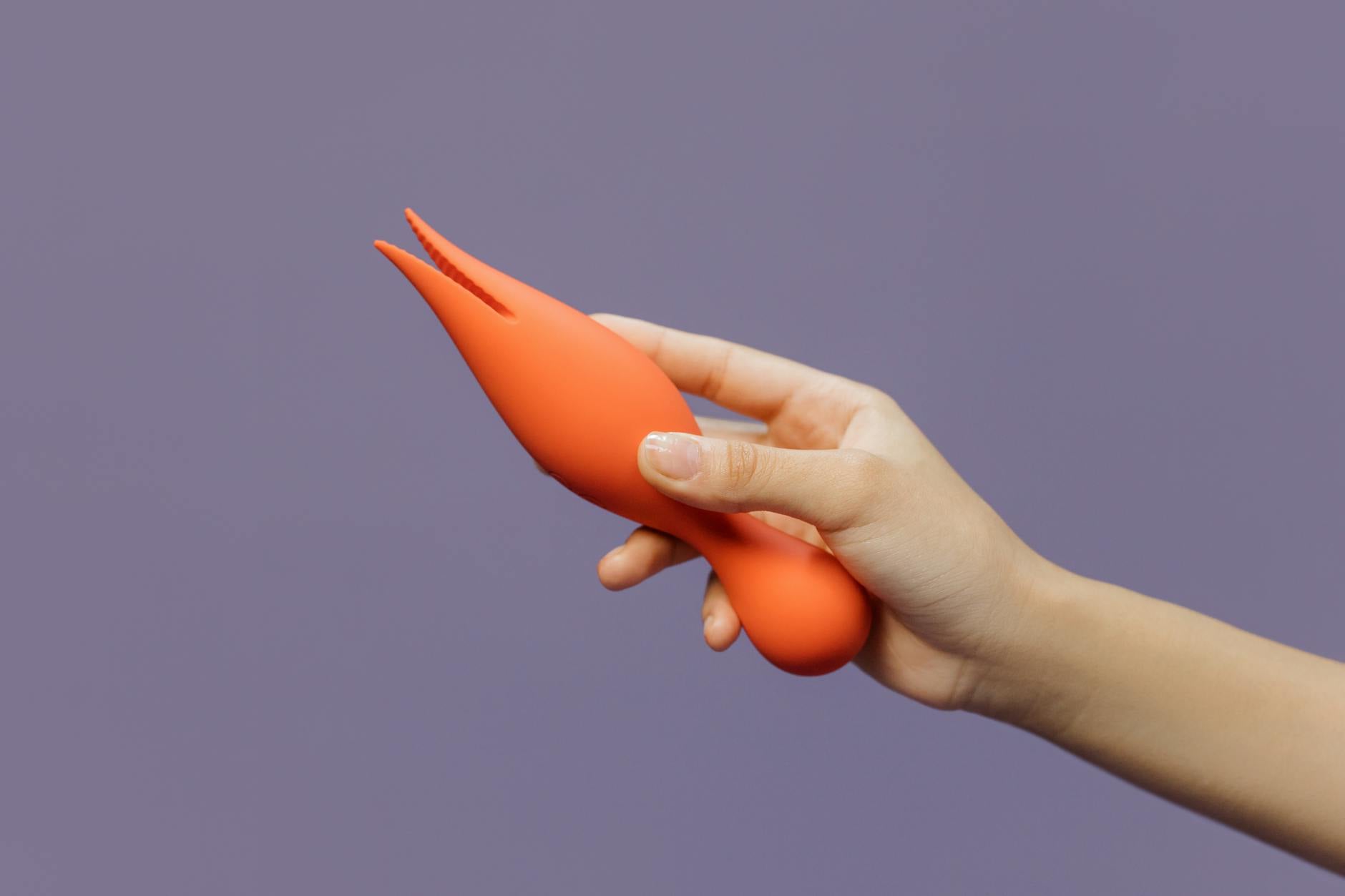
Let's address the worry first
You're holding a lemon vibrator for the first time and thinking: am I going to break this? Will I figure out how it works? What if I'm doing it wrong? That voice is normal. It's also lying to you.
Here's the truth. There is almost no learning curve here. The lemon vibrator is so intuitive that you'll understand it the moment you pick it up. What takes a little practice is understanding what YOUR body likes, not how the toy works.
Those are completely different things.
What's actually easy (spoiler: almost everything)
The lemon sucker design is brilliant specifically because it's not complicated. It's a handheld device with one job. You turn it on, you find the sensation you like, you adjust intensity. That's it.
Three things that will feel natural immediately:
First, the weight and grip. Lemon vibrators fit in your palm. The contour follows your hand naturally. You won't fumble around looking for where to hold it. Your body just knows.
Second, the button placement. Usually one button, sometimes two. You're not navigating a control panel. Press once, it turns on. Press again, the pattern or intensity shifts. Long press, it turns off. After about thirty seconds you'll stop thinking about it.
Third, the sensation itself. The moment you feel the suction or vibration, your nervous system will recognize it. You won't wonder if you're doing it right. You'll either feel something nice, or you'll adjust. This is genuine feedback, not a puzzle.
What actually takes practice (and that's fine)
Three things that need a little exploration.
Finding your sweet spot. Every body is different. Your sensitivity, the angle that feels best, the pressure you want, the pattern that makes you feel something. These preferences are unique to you. The first three to five times you explore, you're gathering data. By session five or six, you'll know what works. This isn't failure. This is exactly how bodies work.
Pressure and placement. A lemon vibrator works best with the opening against your skin. Too light and you're missing the sensation. Too much pressure and it might feel uncomfortable. The learning curve here is genuinely about ten seconds. You'll find the right pressure almost immediately. If you don't, adjust. That's the entire skill.
Pacing yourself. Some people worry that if they use a lemon vibrator regularly, they'll become dependent on it or unable to orgasm without it. This is actually a myth. What's real is that your body might take a few sessions to relax fully with a new tool. That's not dependence. That's adjustment. Once your nervous system trusts the toy, you'll find your pleasure is actually more flexible, not less.
The actual step-by-step (do this your first time)
Start in a comfortable position. Sitting, lying down, whatever feels natural. You're not auditioning for anyone. This is about you figuring out you.
Take ten minutes without pressure. This is exploration, not performance. Turn the vibrator on at the lowest setting. Notice what you feel. Is it pleasant? Too much? Just right? Move it slightly. Change the angle. There's no wrong answer here.
If it feels good, stay with it. If it feels like nothing, adjust the pressure or try a different spot. Your clitoris is actually a whole structure, not just one point. Exploring around teaches you where you're most sensitive. This is valuable information.
If you feel overwhelmed by sensation, turn it off. Take a breath. You're not broken. You just found information about what intensity you need. That's useful.
Start at the lowest setting every time until you know what you like. You can always go higher. You can't unring the bell if you start at maximum intensity and it feels like too much.
Don't set a time limit. Don't expect an orgasm. Don't worry about what's taking too long. You're learning. That's the entire point.
The confidence piece (this matters more than you think)
Here's what I see in couples work constantly. Someone brings a new toy into the relationship and the partner assumes there's a specific right way to use it. There isn't. There's only your way.
When you stop treating this like a test you can fail and start treating it like information you're gathering, everything shifts. "I'm trying to figure out if this works for me" is a completely different energy than "I'm doing this wrong."
You're not doing it wrong. You're doing it the way you're doing it. If that feels good, you're done. You've won.
Common first-time worries (let's kill them)
"What if nothing happens?" Something will happen. You'll feel sensation. It might not be an orgasm. That's not a failure. Some people need multiple sessions before their body fully relaxes into a new tool. Some people need a different intensity level. Some people need mental permission to stop worrying. All of that is normal.
"What if it's too intense?" Start at the lowest setting. Stay there as long as you need. Your comfort matters more than exploring every setting.
"Will I be 'ruined' for partnered sex?" No. Your body is not a finite resource that can wear out or forget how to feel pleasure with a partner. In fact, many people report that learning their own preferences with a tool actually improves partnered sex because they have better information about what they like.
"Is there a time limit for this to work?" Give yourself at least three sessions before you decide it's not for you. Your nervous system needs a little time to settle. But honestly, most people feel something pleasant the very first time.
When to adjust your approach
If the sensation feels genuinely uncomfortable (not exciting, not vulnerable, not unfamiliar, but actually uncomfortable) after adjusting pressure and position, you might need a different intensity level. That's a tool calibration issue, not a you issue.
If you're feeling anxious the whole time, that's telling you something. Maybe you need more privacy. Maybe you need to slow down your timeline. Maybe you need a partner conversation first. Listen to that anxiety instead of pushing through it.
If after several attempts you still feel zero sensation, check the battery. Check the power button. Sometimes it's literally a technical thing. If it's working and you feel nothing, reach out to Get Lemon Vibes support. A defective unit is rare but possible.
The truth about the learning curve
Honestly? You're going to feel silly for ever worrying about this. The learning curve isn't steep because there isn't really a curve. There's just you, your body, and a toy that's designed to work intuitively with both.
What you're actually doing in those first few sessions isn't learning how to use the toy. It's learning about yourself. And that's the part that takes time. Not because it's hard. But because it's worth paying attention to.
Start low, stay curious, and let your body tell you what it likes. That's the entire technique.
FAQ
How many times should I use a lemon vibrator before deciding if it works for me?
Give it at least three sessions before you make a final call. Your nervous system genuinely does need a little time to acclimate to new sensation. If after three attempts you feel nothing and you've tried different pressures and positions, that's data. You might be someone who responds better to a different type of toy. That doesn't mean you're broken. It means you're learning.
Can I use a lemon vibrator if I'm nervous about orgasming too quickly?
Absolutely. Start at the lowest setting and take your time. The suction design actually gives you really good control over intensity, so you can stay right in that sweet spot where things feel amazing but you're not rushing toward climax. This is one of the advantages of exploring at your own pace.
What's the difference between a lemon vibrator and a traditional vibrator for someone new to toys?
Traditional vibrators are usually just vibration. Lemon vibrators use suction or a specialized stimulation pattern designed for clitoral sensation. Many people find suction-based toys more intuitive because they mimic natural sensation more closely. If you're new to toys in general, a lemon sucker-style vibrator is often easier to understand quickly because the sensation feels less foreign.
How do I know if I'm using the right pressure?
Your body will tell you. If you feel genuine pleasure, you're in the right zone. If it feels ticklish or numb, increase pressure. If it hurts or feels too intense, decrease it. There's a range where it feels good for you, and that range is usually pretty wide. You'll find it by experimenting, not by following instructions.
Is there a right angle to position a lemon vibrator?
Most people find that placing it directly against the clitoris works best, but some prefer the sensation slightly off to one side, or moving in slow circles. Your preferences might surprise you. That's why exploration is actually the fun part. There's no single right angle. Just the angle that feels right for you.
What if I don't orgasm the first time I use a lemon vibrator?
That's completely normal. An orgasm isn't the goal on your first try. Comfort, curiosity, and sensation are the goals. Many people take three to five sessions before their body fully relaxes into pleasure with a new toy. If you're in a relationship, that timeline might be different than if you're solo. Either way, pressure to orgasm is the fastest way to stop an orgasm from happening. Focus on what feels good instead.
Your next step
Stop treating this like a test. You already have all the information you need. Pick up your lemon vibrator, get comfortable, and explore. Your body will guide you. Trust that. If you have questions after your first few sessions, Get Lemon Vibes has a support team ready to help, or reach out at /contact. They've heard every question and every worry. You're not alone in this.