The medication effect nobody talks about
You started the SSRI six months ago. Or the antihistamine. Or the blood pressure medication. And somewhere between week three and week six, you noticed everything felt drier down there. Not just sometimes. Always.
Then came the guilt. The assumption that your body was failing. That you'd aged out of something or that your partner wasn't attractive enough anymore. None of that is true. Your medication is literally turning off the tap.
Here's the thing: this is wildly common, completely reversible, and fixable right now without switching meds or giving up pleasure.
Why medications dry you out
Three categories of drugs are notorious for this:
SSRIs and SNRIs (antidepressants). These block serotonin reuptake to lift mood, but they also disrupt acetylcholine, which triggers vaginal lubrication. Sertraline, fluoxetine, paroxetine, venlafaxine—same mechanism, same side effect.
Antihistamines (allergy and cold meds). Histamine isn't just for allergies. It's involved in sexual arousal and lubrication. Block histamine to stop a sneeze, and you also block the signal for natural lubrication.
Blood pressure and heart meds. Certain beta-blockers and ACE inhibitors reduce blood flow to the genitals and suppress arousal hormones. Your cardiovascular system is stabilized. Your sex life isn't.
Add to this any diuretic, anticholinergic, or decongestant, and the cumulative effect is real. You're not depressed or broken. Your medication is working exactly as designed. The lubrication side effect is just collateral damage.
Why a lemon vibrator handles dryness better than vibration alone
A traditional vibrator uses friction and repetition. That works fine when you have lubrication to buffer the motion. When you don't, friction creates irritation, sometimes pain, and often frustration.
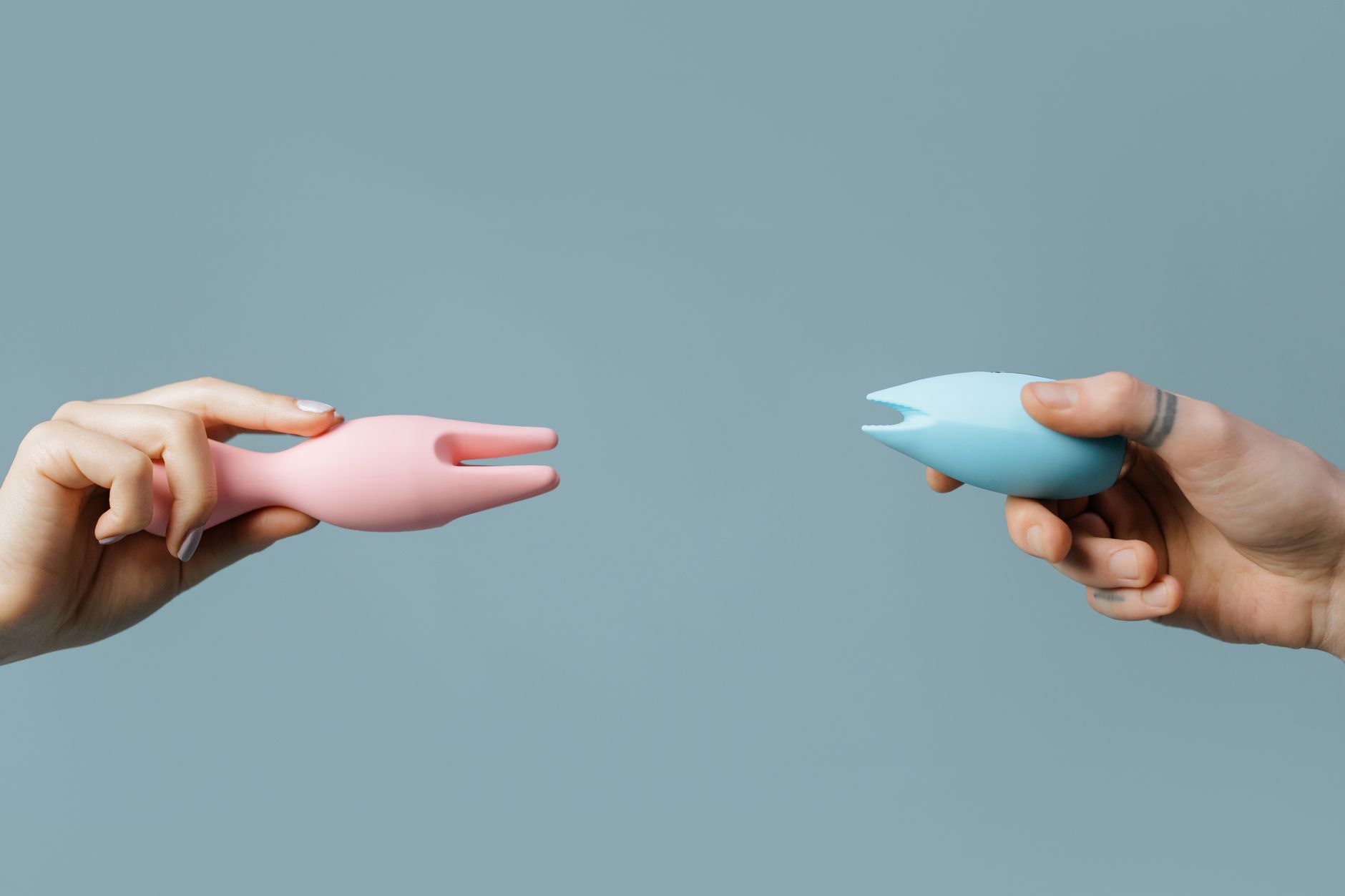
A lemon clitoral vibrator uses suction and pulsing instead. Here's the mechanical difference:
With a lemon sucker, the sensation is created by gentle suction and releases, not by the toy moving across tissue. This means less direct friction, more distributed stimulation, and—crucially—better access to pleasure even when you don't have baseline lubrication.
The suction also increases blood flow locally, which actually encourages your body's own lubrication response. It's not a workaround. It's a different signal that sometimes your body responds to even when medications are suppressing the usual pathway.
The lubrication strategy that actually works
Let's be clear: a lemon vibrator is not a substitute for lube. It's a complement to it.
Start with a water-based lubricant. Apply it generously to your vulva and the toy before you start. Water-based lubes are safest with silicone toys, they're easy to reapply, and they wash off without leaving residue. Silicone-based lubes last longer, but they can damage silicone toys and are harder to clean.
Here's a pro move: some people find that hyaluronic acid serums designed for vulvar care (not face serums, not bath oils) layer well under water-based lube and provide deeper moisturizing. You're building hydration into the tissue itself, not just coating the surface. That compounds the effect.
If dryness is severe or persistent, ask your doctor about vaginal moisturizers you can use daily, independent of sex. These aren't lube. They're preventive. Brands like Hyalo Gyn or Hyead are formulated specifically for medication-related dryness and can shift your baseline.
Using a lemon toy when you're on medication
Here's the tactical progression:
Session one: low stakes, exploration. You're not trying to orgasm. You're learning how your body responds under these new conditions. Apply lube. Start at the lowest suction intensity. Spend 3-5 minutes just getting used to the sensation. Notice what feels good, what feels too intense, what feels neutral. This is data gathering, not performance.
Session two: add time, keep intensity low. You can now extend to 10-15 minutes at intensity 1 or 2. Many people find that suction sensations actually build arousal over time, unlike some vibration which can plateau. Your body might surprise you.
Sessions three and beyond: calibrate. Now you know your preferences. You might find you prefer lower intensity for longer. You might find that certain patterns work better with your medication-changed response. You're not broken. You're just using different settings.
The second-order effect: mental shift
Medication-related dryness often comes with a psychological hit. You internalize it as something wrong with you, not with the medication. That belief then suppresses arousal further, which compounds dryness, which deepens the belief.
Using a lemon clitoral vibrator is sometimes less about the vibrator itself and more about resetting that narrative. "Oh. I can still feel things. My body can still respond. The medication changed the setup, not my capacity."
That shift is huge. Pleasure is at least 60 percent mental. When you genuinely believe your body works, even if it works differently, the experience transforms.
When to talk to your doctor
Dryness from medication is normal and manageable. But it's worth mentioning to whoever prescribed the med because sometimes there are solutions:
Switch timing: Some SSRIs cause fewer sexual side effects if taken at a different time of day. Evening instead of morning, or vice versa. Same medication, different impact.
Dose adjustment: Occasionally, a lower dose reduces side effects without losing efficacy. Your psychiatrist can advise.
Additive medication: Some doctors prescribe bupropion or buspirone alongside SSRIs specifically to offset sexual side effects. It's not ideal to add another med, but it works for some people.
Try a different drug in the same class: Bupropion-based antidepressants, for example, don't typically cause dryness. If you're on an SSRI, there might be alternatives worth discussing.
Your pleasure matters. It's not frivolous. A good doctor will engage with this conversation seriously. If they don't, it's worth finding one who does.
FAQ: medication-related dryness and clitoral vibrators
Will a lemon vibrator help if my dryness is really severe?
Yes, but lube is non-negotiable. If you're dealing with clinical-level dryness, start with a daily vaginal moisturizer first. Then layer water-based lube under the toy. The lemon's suction can increase local blood flow and encourage your body's own response, but it's not magic. You're using it as part of a system, not in isolation.
Can I use silicone-based lube with a lemon clitoral vibrator?
Technically, silicone toys and silicone lubes can degrade each other over time. Water-based is safer. But in practice, many people use silicone lube occasionally with silicone toys without issues. Just wash thoroughly after. If you're using it regularly, water-based is the smarter choice.
Does medication-related dryness mean I have a lower sex drive?
Not necessarily. Dryness and desire are different. Many people on SSRIs report that libido stays intact but physical arousal (lubrication, engorgement) is suppressed. The lemon vibrator can help bridge that gap because it's triggering pleasure through suction rather than relying on arousal-dependent lubrication.
How long does it usually take to feel comfortable using a toy when you're dry?
First session, you're adjusting. Second to fourth sessions, you're learning what works. Most people report feeling genuinely comfortable by session five or six. You're not waiting months. You're waiting a couple weeks.
Should I tell my partner about the medication dryness?
If you have a partner, yes. Not as a confession of something wrong, but as practical information. "My medication affects lubrication. Let's add lube and maybe try a different approach." Transparency here usually deepens connection. Your partner isn't failing you. Your medication changed the equation. You're solving it together.
Can I use a lemon vibrator if I'm also using vaginal estrogen cream?
Yes. If your doctor has prescribed topical estrogen (often prescribed specifically for medication-related dryness), the lemon vibrator is a great complement. The estrogen thickens tissue and improves lubrication over weeks. The vibrator handles immediate pleasure now. They work well together.
The actual bottom line
Medication dryness is mechanical, not psychological. Your body isn't failing. The chemistry shifted. A lemon sucker works with that shift instead of against it because it relies on suction and pulsing, not friction. Add lube, start low, give yourself five or six sessions to calibrate, and talk to your doctor about whether there are medication adjustments worth trying.
Your pleasure isn't a luxury that evaporates when you start an antidepressant or an allergy med. It's a part of your health. Treat it that way, and you'll figure this out quickly.
If you're exploring what works best for your body right now, Hello Nancy's buyer's guide breaks down which clitoral vibrators work well for different situations. And if you want to talk through your specific setup, reach out to us. We're here for this conversation.
Sources & references
American Psychiatric Association. (2013). "Sexual dysfunction and psychotropic medications." Diagnostic and Statistical Manual of Mental Disorders, Fifth Edition.
Friedman, M. S., et al. (2016). "Antidepressant-induced sexual dysfunction: Impact and treatment strategies." Journal of Sexual Medicine, 13(10), 1495-1503.
Khan, A. Y., et al. (2009). "Medication-related sexual dysfunction: A literature review." Psychosomatics, 50(1), 13-23.
Meston, C. M., & Frohlich, P. F. (2000). "The neurobiology of sexual function." Archives of General Psychiatry, 57(11), 1012-1030.
Derogatis, L. R., & Burnett, A. L. (2008). "The epidemiology of sexual dysfunction." Journal of Sexual Medicine, 5(2), 289-300.