
Let's name the thing nobody says out loud
You can make yourself come in under five minutes alone. But with your partner? Nothing. Not a whisper. Your body just... locks up. And then you're either faking it, lying about being tired, or staring at the ceiling wondering what's wrong with you.
Nothing is wrong with you. This is wildly common, and it's not a you-problem. It's a mismatch between what your nervous system needs and what partnered sex typically offers.
Why this happens (it's not what you think)
Here's what I see clinically: most people assume the issue is desire or attraction. They spiral into "my partner doesn't turn me on" when the actual mechanics are totally different.
When you're alone, you control everything. The rhythm, the pressure, the pause-and-restart pattern, the exact spot. Your brain gets predictable input. Your body responds.
During partnered sex, especially penetrative sex, the clitoris gets less direct stimulation than when you're solo. Even when it's present, the rhythm isn't the one your nervous system learned. Your partner is working from their own tempo, their own stamina. And here's the part that matters: your brain is also doing cognitive work. You're monitoring your partner's pleasure, managing performance anxiety, tracking whether you're "taking too long." That mental load literally interferes with orgasm.
Mix those three things together and your parasympathetic nervous system, the one that allows orgasm to happen, never fully activates. You're stuck in a sympathetic state. Alert, present, but not aroused enough to come.
The lemon vibrator changes the equation
Lemon clitoral vibrators, especially the suction-based design of Hello Nancy's Lem, work differently than you might expect. They don't replace your partner. They supplement the gap.
Here's the physics: suction stimulates a wider nerve field than direct vibration. The sensation is more diffuse, which means it's less likely to cause the numbing that can happen with traditional vibrators at high intensities. For partnered use, this matters enormously.
When you introduce a lemon vibrator during sex with your partner, three things shift:
First, you get back control of clitoral input. Your partner's movement doesn't have to align with what makes you come. You can hold the Lem or position it while they do their thing. Your nervous system gets the predictable signal it needs.
Second, the mental load lightens. Once you've got your clitoral stimulation handled, you can actually focus on the connection rather than the checklist. Paradoxically, using a toy makes you more present, not less.
Third, orgasm becomes achievable. When the right sensation happens and your brain isn't running a background anxiety program, your parasympathetic nervous system can finally activate.
How to actually use it during partnered sex
There's a communication piece first. This needs a conversation outside the bedroom, ideally when you're both clothed and there's zero pressure. Not "I can't come with you" but "I've noticed I come way easier with clitoral stimulation, and I'd like to try using a toy with us. I want to be able to actually feel good with you."
If your partner is hesitant, that's its own conversation. But assuming they're on board, here's the practical setup:
Start during foreplay, before penetration. Position the Lem or similar clitoral vibrator on lower settings (pattern 1 or 2 if you're using the Lem). Let your body warm up with direct clitoral stimulation while your partner touches you elsewhere. This isn't "weird." It's you giving your body what it needs.
Once you're genuinely aroused, your partner can enter however makes sense for you both. You keep the vibrator in place, holding it at the angle that works. The stimulation stays constant while they move. This is actually easier than it sounds because you're not juggling anything. One hand holds the vibrator, one hand can touch your partner. You're still present, still connected.
Timing matters less than you think. Some people come before their partner, some after, some at the same moment. None of that changes the fact that you're finally getting genuine pleasure instead of performance anxiety.
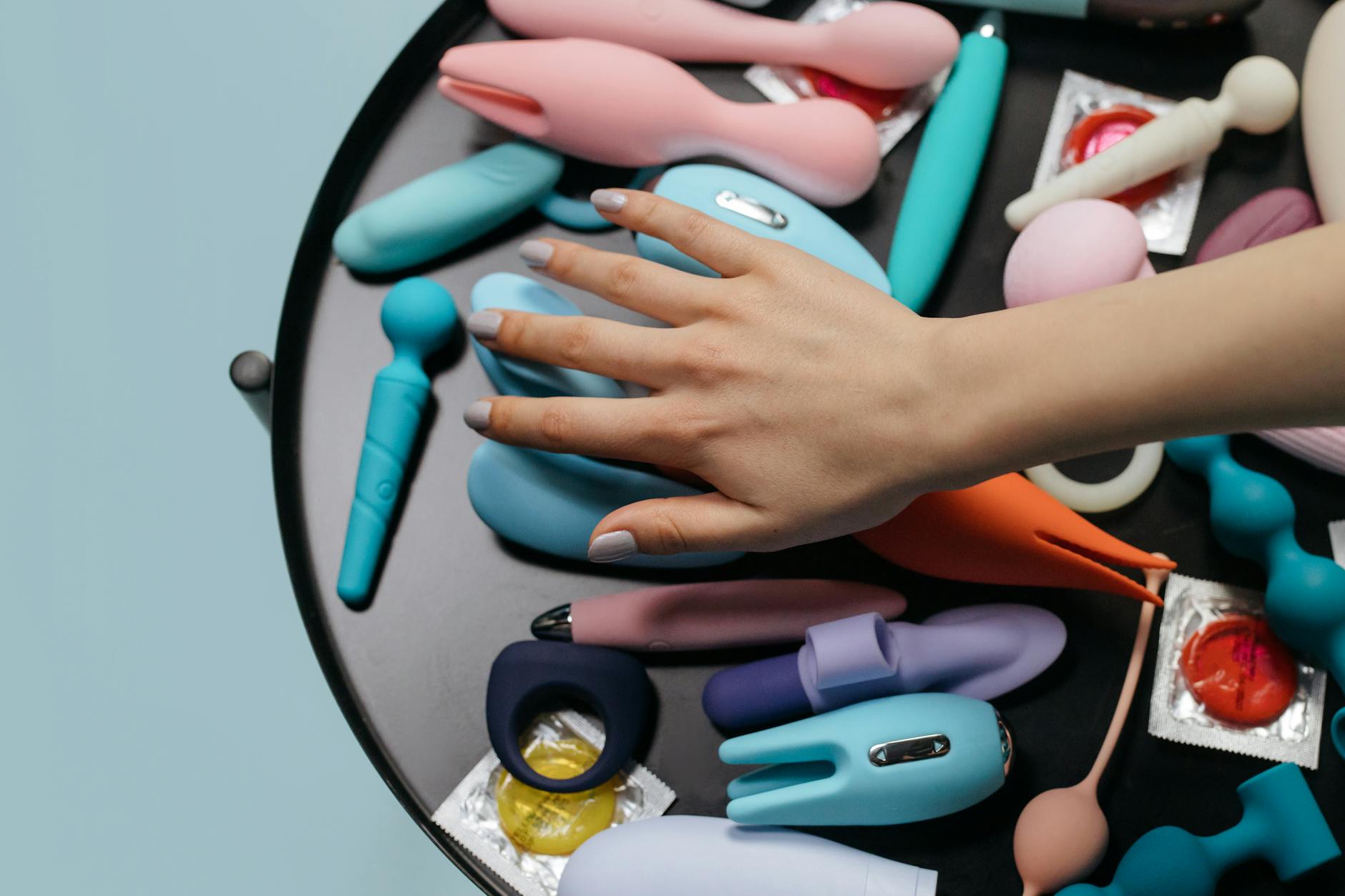
Photo by cottonbro studio on Pexels
The conversation you actually need to have
Here's where most couples get stuck: one person brings up the toy, the other person hears "you're not enough," and suddenly it's a bigger fight than it needs to be.
Frame it correctly from the start. You're not saying your partner is bad at sex. You're saying your body needs something specific. That's true whether the issue is a lemon vibrator or additional foreplay or a different position. Everyone's nervous system works differently.
If your partner is worried that using a toy means you find them less attractive, that's worth addressing directly. Explain that you can have an orgasm during partnered sex now, something that literally wasn't happening before. That's not a loss for them. That's a win for both of you.
Some partners surprise you and want to hold the vibrator themselves. Some want to use it on you. Some prefer you maintain control. All of those are fine. The point isn't who's holding the toy. The point is your body finally gets to feel good in a partnered context.
Common worries, actually addressed
"Won't it make me dependent on a toy?" No. Your body isn't becoming addicted to the sensation. You're giving it permission to relax into pleasure in a partnered context. That's learning, not dependency. And for the record, if you could come with a partner without a toy, you already would be.
"Will my partner feel replaced?" Only if the framing is wrong. Position the vibrator as a team thing. You're both working toward you getting to feel good. That's collaboration, not replacement.
"Doesn't this mean something is broken?" Not even slightly. Different people's nervous systems need different conditions to orgasm. Requiring direct clitoral stimulation during partnered sex is not a malfunction. It's just how you're wired.
Why communication matters more than the toy itself
I've seen plenty of couples where the woman buys a lemon vibrator solo, hides it, uses it guiltily, and the underlying problem (no communication about pleasure) gets worse. The toy doesn't fix relationship dynamics. But honest conversation about what your body needs? That actually does.
Start the conversation early. Not right before sex. Not in a moment of frustration after faking an orgasm. Literally any other time. Say something like: "I want to try something that might help me come with you. I'm curious if you'd be open to it."
Then listen. Your partner might have concerns. They might have their own stuff about performance or feeling like they're not enough. That's real and worth honoring. But keep the conversation separate from the practical question of whether you use a tool to make partnered sex better.

Photo by Anna Shvets on Pexels
The research piece that shifts everything
One fact worth knowing: studies on partnered orgasm show that people with clitorises are dramatically more likely to come when clitoral stimulation is present and controlled. Penetration alone doesn't do it for most people. A lemon clitoral vibrator isn't a workaround. It's literally what makes the math work.
When you reframe the vibrator that way in your head, it stops feeling like a compromise and starts feeling like informed decision-making. You're not settling. You're being realistic about anatomy.
Once your partner understands that too, it often shifts the dynamic entirely. Instead of you feeling broken, you're both like "oh, that's literally how bodies work. Cool, let's figure this out together."
Next steps that actually work
First: decide if you want to have this conversation. If you do, pick a low-pressure moment.
Second: if your partner is hesitant, learn how to use a lemon vibrator with a partner who is hesitant or skeptical. That covers the deeper communication angle.
Third: if you've been faking for months or years, understanding that you're not broken but you do need direct clitoral stimulation isn't just about the toy. It's about permission. Permission to ask for what you need. Permission to not pretend. Permission to actually feel good instead of performing good.
Your partner likely wants you to come. Most people do. They might just need clarity on what makes that possible. A lemon vibrator, used thoughtfully and talked about honestly, is often the bridge.
Frequently asked questions
Can I use a lemon sucker like the Lem during penetration?
Yes, and most people find it works better than traditional vibrators because suction doesn't numb the tissue the way buzzing can. Position it so your partner can still move without hitting your hand, or explore angles where you're holding the toy steady and they're moving inside. Some couples find keeping it in place during penetration easier than switching between stimulation types.
What if my partner comes first?
Then you keep going. The beauty of introducing a lemon clitoral vibrator is that it decouples your orgasm from theirs. They can finish, stay present with you, and you keep using the vibrator until you come. No pressure, no performance timeline.
Does using a vibrator make me less likely to come without one?
No. Your body isn't becoming conditioned to only respond to the toy. In fact, many people find that once they've actually experienced partnered orgasm with the vibrator, they're more aroused and connected in future sex without it, because they know it's possible now.
What if my partner wants to use the vibrator on me but I prefer to hold it?
Tell them. This is actually a super common preference because you know exactly where the sensation needs to be. It's not rejection of them. It's you knowing your own body. Partners usually get this when you frame it that way.
Are there positions that work better with a clitoral vibrator?
Generally, positions where your partner isn't directly covering the clitoral area work best. Woman-on-top, side-by-side, or from-behind positions usually give you space to hold or position the vibrator. Experimenting beats guessing.
If I can orgasm alone, why can't I during partnered sex?
Because solo sex gives your brain safety and predictability. Partnered sex adds performance anxiety and rhythm mismatch. A lemon vibrator removes one variable (unpredictable clitoral stimulation) so your nervous system can relax into the others.
The real thing underneath
Cantle come with your partner isn't about the vibrator. It's about asking yourself what you actually want and then having the courage to ask for it. The tool is just the excuse to start the conversation. The conversation is where everything changes.
Your pleasure matters. Your body isn't broken. And yes, a lemon vibrator really does help most people in this exact situation. But only if you're willing to be honest about what you need. That's the part most people skip. Don't be that person.