Let's name what's actually happening
Your desire didn't disappear. It got buried under the weight of constant physical contact, emotional labor, and the low-level panic that comes with keeping small humans alive. That's not a personal failure. That's your nervous system doing exactly what it's designed to do when you're in survival mode.
Here's the thing nobody tells you before you have kids: desire is not separate from your overall capacity for touch, presence, and attention. When all three are maxed out by 7 p.m., sex doesn't feel like a release. It feels like one more demand on your already-depleted body.
I work with couples through this transition constantly, and the good news is that desire doesn't have to stay buried. It just needs a different approach than it got before kids arrived.
Why parenting specifically kills libido
Three things happen simultaneously after you become a parent.
First, your body is touched constantly. Your kids hang on you, lean on you, need physical contact from you. Even after bedtime, you're running on what I call "touch debt." You've given away your physical resources, and what's left doesn't feel like yours anymore. Your partner touches you, and your nervous system doesn't register it as pleasure. It registers it as yet another person needing something from your skin.
Second, your brain is in a perpetual state of planning and worry. You're running a mental checklist of vaccines, school pickups, whether anyone's constipated, what's for dinner, if you remembered to pack lunch boxes. Sex requires a certain amount of mental quietness that parenting actively prevents. Desire can't exist in the background while your brain is foreground-tasking on logistics.
Third, your sense of self gets diffuse. You're "mom" or "dad" before you're anything else. The version of you that felt sexy, or playful, or just separate from everyone else? That person doesn't get much airtime. Desire is hard to access when you're not sure who's doing the desiring anymore.
That's not a hormonal problem, though hormones can complicate it. That's a capacity problem.
The specific moment things shift
Most couples tell me the desire drop happens somewhere between months 3 and 8 postpartum, or sometimes not until kids are older and the novelty of "I'm a parent now" wears off into the chronic fatigue of actually parenting a toddler.
There's a particular cruelty to the timing: your partner has been patient, maybe horny, definitely waiting for the green light. You finally have a sitter or a quiet evening, and your partner reaches for you with actual hope in their eyes. And you feel... absolutely nothing. Worse than nothing. You feel resentment that someone else wants something from your body right now.
That moment is not a sign your relationship is over. It's not a sign you've become asexual or that you and your partner are incompatible. It's a sign you're touched out, which is a real, temporary, fixable state.
How lemon vibrators work differently here
This is where air-suction toys like the Lem change the equation.
There are two reasons a lemon clitoral vibrator feels different when you're touched out. The first is that suction stimulation doesn't require the same kind of direct contact that traditional vibrators do. You're not putting something inside you. You're not experiencing penetration. You're just sitting with a toy that pulls gently at your clitoris, and that's it. The stimulation is concentrated and specific. It doesn't ask your whole body to participate.
The second reason is texture and intention. When your partner touches you, it comes with relational weight. They want something from the interaction. They want closeness, or to feel wanted back, or to reconnect. When you're using a lemon vibrator solo, it's purely about you. There's no obligation to reciprocate. No one's emotional needs are on the table. You can focus entirely on sensation without the background anxiety of managing someone else's feelings.
Many parents in my practice tell me that reclaiming solo pleasure first is what eventually unlocked coupled desire again. It's not selfish. It's rebuilding your nervous system's capacity to feel good in your own body.
What to actually do this week
Three practical steps.
First, talk to your partner about what touched out actually means. Don't frame it as "I don't want you." Frame it as "My nervous system needs a break from being needed." Most partners can understand that distinction even if they feel it as rejection initially. Give them permission to feel disappointed while also being clear that this is about your capacity, not their attractiveness.
Second, give yourself 20 minutes alone with a toy. Not during nap time when you should be showering or doing laundry. Actual protected time. If that feels impossible, you can recognize that as a signal you need to ask for help. No desire is going to emerge from a body that can't find 20 minutes of privacy, period.
Third, notice what happens in your nervous system. Does solo stimulation feel easier than partnered sex right now? Does it feel more accessible? That's valuable data. It's telling you that you need more unilateral control and less relational complexity in this moment. That's information you can share with your partner.
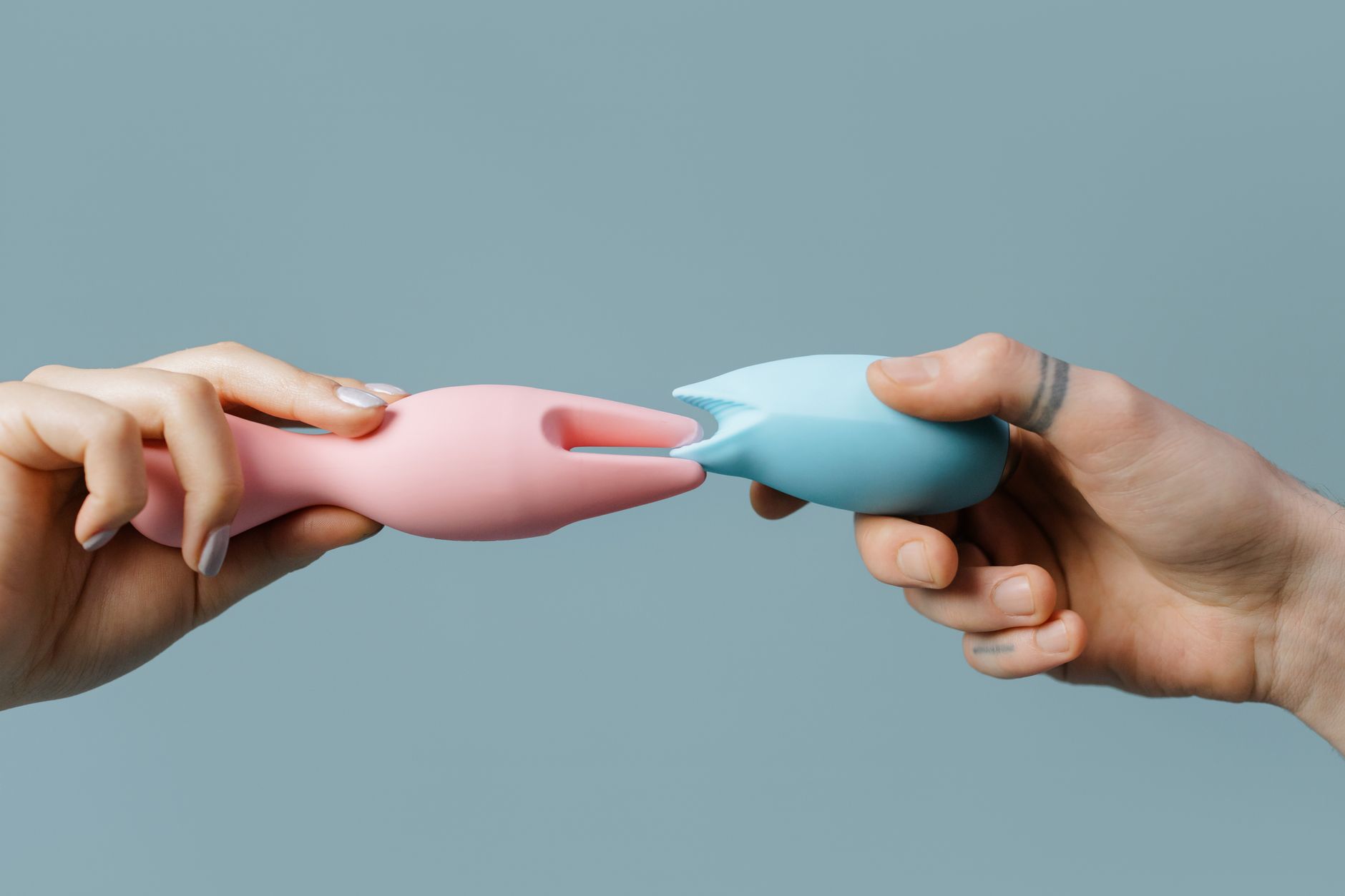
Photo by cottonbro studio on Pexels
The partner piece matters more than you think
Honestly, your partner's response to this moment is either going to speed up your recovery or slow it down significantly.
If your partner can understand that your low desire is not about them, and can support you rebuilding pleasure on your own timeline, things shift. They stop badgering you for sex. They stop taking it personally when you opt out. They might even help protect that 20 minutes of alone time because they understand it's actually an investment in your eventual availability.
If your partner interprets your touched-out state as rejection and makes it about them, you end up with a secondary problem: resentment. Now you're not just managing low desire. You're managing your partner's hurt feelings about low desire. That makes everything worse.
Have that conversation early. Before you're trying to have sex and failing. Before someone feels rejected and stops trying. Before the wedge gets wider.
When desire starts returning
It won't come back all at once. It'll come back in flashes. You'll have a moment where you notice your partner's hands and think "oh, maybe." Or you'll be alone with a lemon vibrator and notice your body is more responsive than last week. Those are the green shoots. They're small, but they're real.
Most parents I work with find that as kids get older and need them physically less, desire starts to naturally recalibrate. But you don't have to white-knuckle through the meanwhile. Air-suction toys, solo exploration, and honest conversations with your partner all speed that return up.
The relationship isn't broken. Your nervous system is just protecting itself. Once you acknowledge that, you can actually do something about it.
FAQ: Low Desire After Kids and Lemon Vibrators
**### Is low desire after having kids permanent?
No. It's temporary, usually lasting anywhere from a few months to a couple of years depending on how much support you have and how much your kids still need physical touch from you. Once kids are in school and you have more autonomy over your body, desire typically starts returning. The key is not to let resentment calcify in the meantime.
**### Can I use a lemon vibrator if I'm still healing postpartum?
Wait until you've been cleared by your doctor, usually 6-8 weeks postpartum. After that, external-only stimulation like a lemon clitoral vibrator is generally gentler than penetration. But check with your own provider based on your specific delivery and healing.
**### What if my partner doesn't understand why I'm touched out?
Try this: have them spend a whole day being physically needed constantly. Kids climbing on them, needing them for every little thing, no breaks. Then have them imagine doing that and also being expected to want sex at the end of the day. Sometimes that visceral experience shifts understanding faster than any explanation.
**### Does using a toy alone mean I'm not attracted to my partner anymore?
No. Desire and attraction are different things. You might be wildly attracted to your partner and still need solo pleasure as a way to reconnect with yourself outside of the parenting role. One doesn't cancel out the other.
**### Should I hide that I'm using a toy, or tell my partner?
That depends on your relationship agreements. But I generally recommend transparency. Secrecy tends to breed more resentment. If you frame it as "I'm doing this to help myself feel more available to you eventually," most partners can work with that even if they have initial feelings about it.
**### How long before solo pleasure leads back to couple sex?
There's no timeline. But most people find that once they've rebuilt some sense of their body as theirs (not just a resource for their kids or partner), coupled desire starts returning naturally. That might be weeks, or it might be months. The pressure to rush it usually backfires.