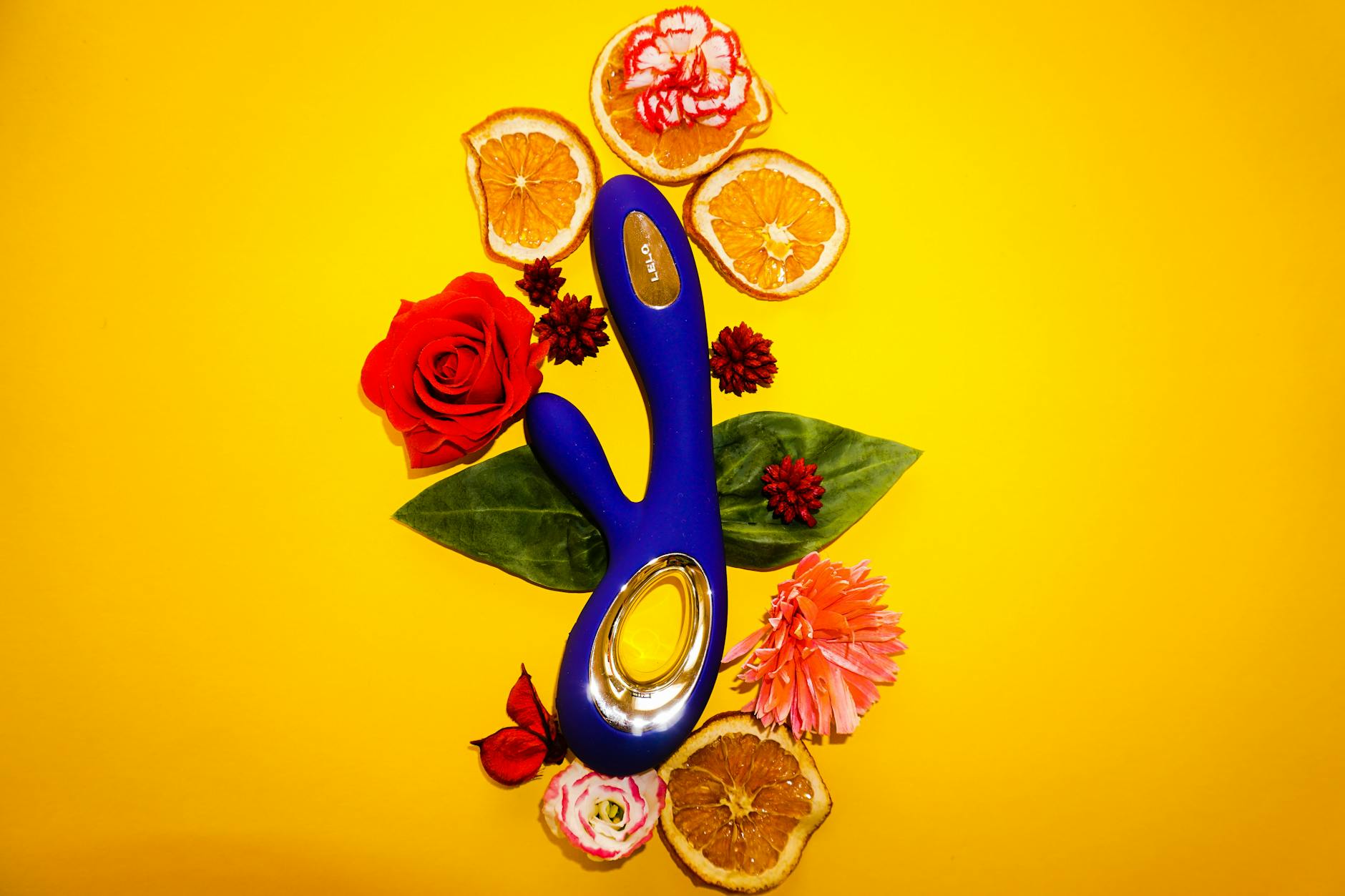
Here's the thing about switching modes
Your body doesn't care that you're using the same lemon vibrator alone versus with a partner. Your brain absolutely does. The nervous system operates differently when you're solo compared to when someone else is present, and pretending that difference doesn't exist is how people end up frustrated or disconnected.
I've worked with countless couples where one partner brings a clitoral vibrator into partnered sex, and the other partner assumes the experience will feel identical to solo play. It doesn't. The rhythm changes. The pressure you want changes. Even the patterns that felt perfect alone can feel wrong with someone watching or touching you.
The good news: these aren't problems. They're just transitions that need awareness and a little intentional practice.
Why solo play and partnered play feel completely different
When you're alone, you have total control. You set the pace, the pressure, the moment you stop and start. There's no performance element, no checking in with someone else's arousal or comfort. Your nervous system is in a parasympathetic state. You're exploring what feels good without an audience, internal or external.
The moment a partner enters the scene, your body shifts into a slightly activated state. Not in a bad way. But there's awareness of another person, attention split between your own sensation and their response, possibly some self-consciousness about being watched. Your lemon vibrator still works beautifully, but the mental context around using it has changed.
This is especially true if you've never used a vibrator with a partner before, or if you've spent months or years relying on solo play exclusively. The rhythm that got you off last week might feel too intense now. The pattern you loved might suddenly feel robotic or distracting.
The pattern transition (and why it matters)
When I recommend a lemon clitoral vibrator to clients, I often suggest starting with solo play first. You learn the device, you find your preferred settings, you understand how your body responds. Then, when you introduce it to partnered sex, you're not simultaneously learning the vibrator and learning how to use it with someone else. That's just too much at once.
But here's the catch: the patterns you prefer alone often need adjustment with a partner present.
Solo, you might use Pattern 5 at full intensity for 15 minutes, building slowly and deliberately. With a partner, you might find Pattern 3 feels better because it leaves mental space to connect with them or because the intensity feels sharper when they're watching. Or you might discover that switching between patterns matters because your body needs novelty to stay engaged when someone else is in the room.
There's no right answer here. The point is noticing that the preference shifts, and giving yourself permission to use the device differently depending on context.
Talking about it before you need to
Honestly, this is the part that matters most. I see so many couples bring a lemon vibrator into sex without actually discussing it beforehand, and then both people are confused when the experience feels awkward or disconnected.
Here's what works: tell your partner what you want before you're in the moment. Not during sex, not when you're already aroused. Have a conversation when you're both clothed, calm, and can actually think.
Say something like: "I've been using this vibrator solo and I really like it. I'd like to try it with you. Here's what I'm thinking. I might want different patterns or pressure than I use alone. If something feels off, I'll tell you. And I need you to know that this doesn't mean anything's wrong with what we do together. It's just adding another option."
Notice what's in that statement: you're setting expectations, you're giving permission for your preferences to shift, and you're reassuring them that this isn't a referendum on your partnership. That matters.
When solo and partnered desires diverge
Sometimes they don't diverge at all. You use your lemon vibrator the same way alone and partnered, and everything flows naturally. That's wonderful and also not universal.
Other people find that they want much faster stimulation when a partner is involved. The presence of someone else creates a different arousal arc, and you need more direct intensity to reach the same peak. That's not a problem. It just means you might use Pattern 6 or 7 with a partner when you'd use Pattern 3 or 4 alone.
Or the opposite happens: your partner's touch becomes distracting when there's also vibration, so you actually want slower, less intense patterns so you can feel their hands or their body against yours.
The key is not deciding in advance what you "should" want. Pay attention to what actually works when you're in that scenario, and adjust.
Building comfort gradually
If you've never introduced a vibrator to partnered sex, don't start with both of you trying to orchestrate the entire experience at once. That's too many variables.
Try this progression instead:
First, use it solo while your partner is nearby but not directly involved. Maybe you're both in the bedroom, but they're reading or on their phone. You're getting comfortable with them knowing it's happening without the pressure of them actively participating. This helps your nervous system acclimate.
Next, have them watch during foreplay, but you're controlling it entirely. You're setting the pace, showing them what feels good, letting them see how your body responds. This is educational for both of you and removes the coordination problem.
Then, invite them to touch you while you use it. Maybe they touch your breasts, your neck, your legs. Your hands are still on the vibrator. This brings in the sensation of their touch while you're managing the vibrator rhythm.
Finally, you can transition to them helping with the vibrator, or using it together in some way. But by this point, you've already normalized the device and you've given your nervous system time to adjust.
The pressure question (literal and emotional)
One thing I see come up constantly: a partner using the vibrator on the other person with a different pressure or intensity than feels right. Not maliciously. They're just trying to help and they're not tuned into how that particular person responds.
This is where communication saves everything. If you're with a partner and they're using the vibrator on you, be explicit about pressure. "A little lighter. Yes, right there. Slower." It's not insulting. It's the fastest way to actually feel good.
And for the partner holding the vibrator: pay attention. Watch how their body responds. Listen to their breathing. If they tense up or pull away, that's information. Ask. "Is the pressure okay?" Some people want grinding pressure. Others want just the tip of the device against them. Some want it held very still. Others want it to move slightly. All of these are normal. None of them require explanation.
Solo play after partnered sex
Here's something nobody talks about: sometimes solo play feels weird after you've been having partnered sex regularly with a vibrator.
You've gotten used to the coordination, the presence of another person, their touch mixed with the vibration. Now you're alone again, and the silence feels loud. The solo sensation feels isolating.
This is temporary, and it passes, but it's worth knowing about. If you find yourself struggling to get aroused solo after introducing partnered vibrator play, give yourself a few weeks of solo sessions to recalibrate. Your body will remember how to be satisfied on its own.
Boundaries and ownership
One practical thing: clarity on the vibrator itself. Is this a shared device or a personal one?
My recommendation: if you're primarily using it solo, it's yours. Your partner has their own if they want one. This removes any weirdness about whose device it is, who should be using it, when it's available. If it's genuinely a shared device meant for partnered play only, have that conversation.
Also worth clarifying: who controls it during partnered sex? Is it always the person being stimulated, or are you comfortable switching that? There's no universal right answer, but there is a right answer for your partnership. Figure it out beforehand.
The mental shift that changes everything
Here's what I want you to know: a lemon clitoral vibrator isn't a substitution for a partner. It's not an indictment of your partnered sex. It's a tool that works differently in solo context than in partnered context, and that's completely fine.
The mental shift happens when you stop seeing solo vibrator use as "lesser than" partnered sex, or when you stop seeing partnered vibrator use as "replacing" something. They're different. They both offer something. Solo play is about deep self-knowledge and the freedom to explore without an audience. Partnered play with a vibrator adds coordination, novelty, shared pleasure, and vulnerability.
Both matter. Both change how your nervous system engages with pleasure. Both deserve intentional attention.
People also ask
Can I use the same lemon vibrator for solo and partnered play?
Yes, absolutely. Just make sure it's cleaned between uses and you both understand whose device it is. If you're sharing, have a conversation about care and storage. If it's primarily your solo device that you occasionally use with a partner, be clear about that boundary.
Why does my body feel different when I use a vibrator alone versus with my partner?
Your nervous system is genuinely in a different state. When you're solo, you're in parasympathetic activation (rest and pleasure). With a partner present, there's a slight sympathetic component (awareness, possible self-consciousness, attention split). Your arousal pathway is also different because you have external stimulation plus the vibration versus just the vibration. All of these factors change sensation.
My partner wants to use the lemon vibrator on me but I'm nervous. How do I handle it?
Tell them you're nervous before it happens. Be specific about what makes you nervous (feeling watched, pressure differences, losing control). Then start slowly. Maybe they just hold it against you while you're both still clothed. Maybe you guide their hand. Give yourself permission to stop and restart. Nervousness decreases through gradual exposure, not through pushing through it.
Is it normal to prefer different patterns solo versus with a partner?
Completely normal. In fact, it's more common than preferring the same settings. Your body is responding to a different context, different arousal level, and different mental state. Notice what works and don't overthink it.
What if my partner is uncomfortable with me using a vibrator during sex?
That's worth a separate conversation, not during sex. Ask what specifically makes them uncomfortable. Is it feeling excluded? Worried about performance? Insecurity about being enough? The reason matters because the solution is different for each. Sometimes it's about them joining in. Sometimes it's about understanding that the vibrator isn't about them at all. Sometimes it's about finding compromise. But that conversation needs to happen clearly and calmly.
How often should I use a lemon vibrator solo if I'm also using it with my partner?
Whatever frequency feels right for you. There's no rule. Some people use it solo weekly and partnered monthly. Others do both regularly. Some people find that once they're in a partnered rhythm with a vibrator, solo use becomes less frequent. None of these are wrong. Listen to what your body and your partnership actually need.
The real deal
Using a lemon vibrator solo and with a partner aren't the same experience, and that's the whole point. You get to explore pleasure in two completely different contexts, each with its own advantages. Solo, you're learning your body without distraction. Partnered, you're adding novelty and coordination and shared vulnerability.
The transition between them just requires attention and communication. Tell your partner what you're thinking. Notice when your preferences shift. Give your nervous system time to adjust. And remember that neither version is better. They're just different, and you deserve to explore both.
If you want to dig deeper into how to navigate these shifts with your specific partnership, reach out. I work with couples on exactly this kind of thing.