Let's start with the awkward part
Most couples don't use toys together because they're stuck in a weird mental script: toys are either for solo exploration or for "fixing" something that's broken. Neither is true. A lemon clitoral vibrator isn't a workaround. It's an instrument that can make partnered pleasure feel completely different, sharper, and often more mutual. The trick is getting past the silence.
Here's the honest thing: introducing a lemon vibrator into partnered sex requires less technique than it requires communication. Once you've had that conversation, the mechanics are simple. But that conversation stops a lot of people cold.
The conversation before the toy
You don't need a PowerPoint. You need context and permission.
Start somewhere low-stakes. Not during sex, not in the bedroom, not when either of you is feeling vulnerable or disconnected. Try: "I've been thinking about trying something new with toys, and I wanted to see if you'd be open to exploring it together." That's it. You've named it. You've made it collaborative ("together"), and you've asked before assuming.
If your partner immediately says no, that's data. Respect it and ask why. Sometimes it's insecurity ("Will I not be enough?"). Sometimes it's logistics ("That seems complicated."). Sometimes it's genuine disinterest. Different answer, different conversation. But you won't know unless you ask.
If they're curious or neutral, share why you want this. "I think it could feel really good" is enough. "I read that couples who use toys together report higher satisfaction" is fair. "I want to explore pleasure more deeply with you" is honest. Pick what's true for you.
Then hand them the choice. "Do you want to give it a shot?" If yes, move forward. If they want to think about it, set a real date to revisit the conversation. Leaving it ambiguous kills momentum.
Picking the right lemon vibrator for couples
This matters more than you'd think. A toy that works beautifully solo might feel wrong in partnership, and vice versa.
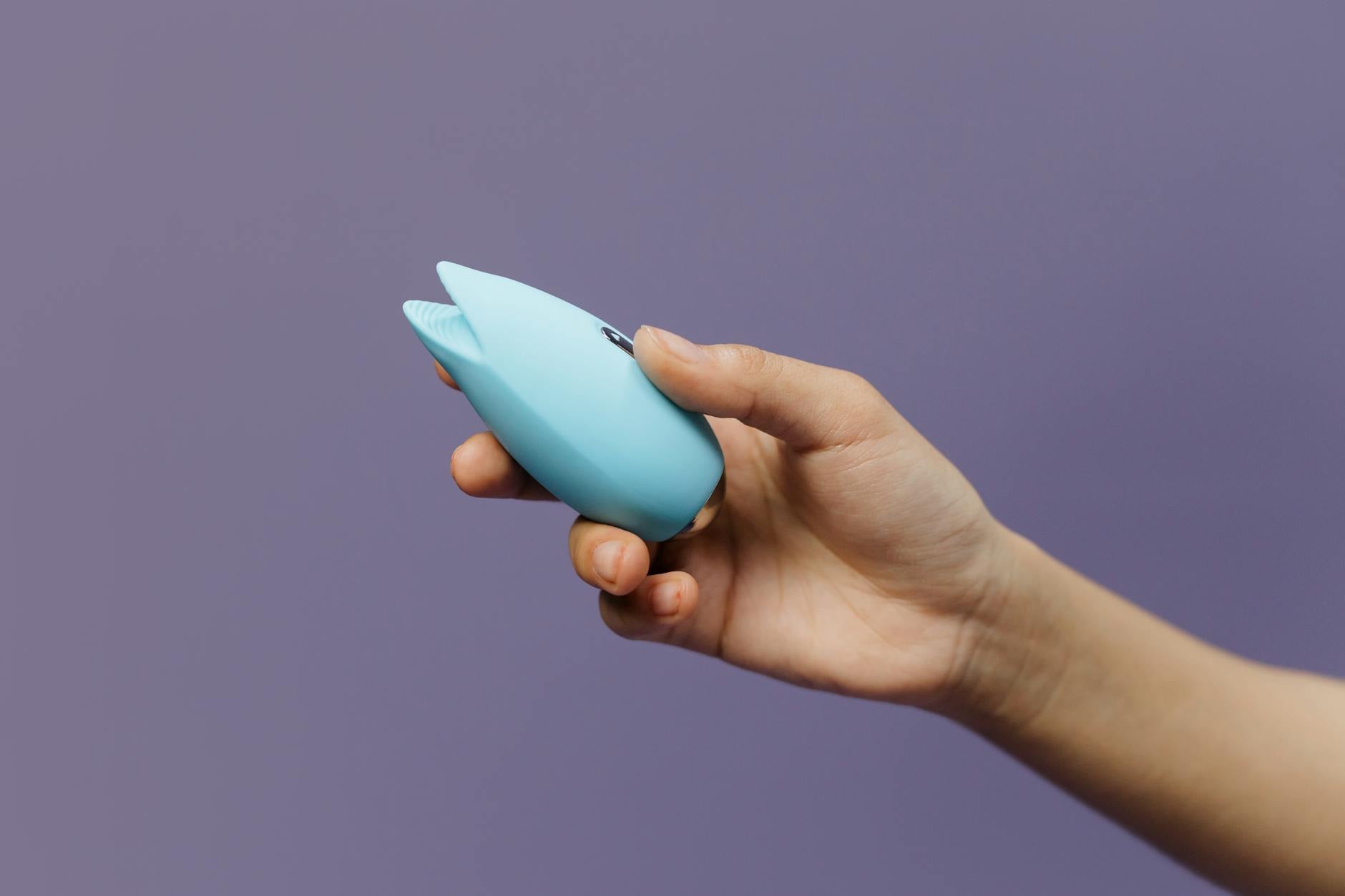
For couples, I recommend the Lem. It's intuitive (no learning curve), the suction sensation is distinctive enough that both partners can feel the difference in the room, and it's small enough that a partner can hold it easily or you can use it hands-free. No fiddly settings to negotiate mid-experience.
That last part is key. If your toy has 12 vibration patterns, someone's going to want to change them constantly. That creates distraction. With the Lem, there's one variable: pressure. Your body and your partner's attention become the focus, not the controls.
Whatever you choose, get familiar with it solo first. You need to know what it feels like, what speeds work for you, what the power button does. Your partner doesn't need to troubleshoot your toy while you're both trying to relax.
The first time together
Clear expectations help. "Let's try this and see how it feels, no pressure to come, no performance happening." That sounds strange to say aloud, and it's exactly why saying it works. You're declaring that this is exploration, not a test.
Start with hands and mouths. Yes, the toy exists. But 15 minutes of partnered touch beforehand creates arousal and safety. You're reminding your nervous system and your partner's that this is fundamentally about connection.
When you introduce the toy, you can hand it to them or guide their hand to it. Either works. The key is staying in contact. A hand on your partner's shoulder, your forehead against theirs, eye contact if you like it—whatever feels like reassurance that they're not being replaced.
Let your partner control the rhythm and pressure at first. This does two things. One: they get immediate feedback on how your body responds. Two: your nervous system registers this as something you wanted but they're giving you, which is erotically different from using it on yourself.
If nothing happens (no orgasm, no dramatic sensation, nothing), that's completely fine. First times with toys are often about learning, not achieving. What mattered is that you tried together.
Making it a regular part of your rhythm
Once you've done it once, the conversation shifts. You've broken the taboo. You know how it feels. Now you can be practical about logistics.
Does your partner like holding it, or does the novelty wear fast? Do you orgasm faster with external stimulation plus internal touch? Does clitoral suction feel better when you're super aroused versus moderately turned on? These are the questions that turn a one-off experiment into actual knowledge.
Many couples find that introducing a lemon clitoral vibrator actually strengthens communication. You're talking about what feels good in explicit terms. You're asking for what you want instead of hoping your partner reads your mind. You're teaching each other your own bodies. That spills into the rest of sex and, honestly, the rest of your relationship.
If you want the experience to feel less clinical, lean into sensation over conversation during sex itself. But absolutely keep talking about it afterward. "That felt amazing when you..." or "I loved it when we..." isn't pillow talk. It's data for next time.
Handling the obstacles that show up
Sometimes a partner will stay nervous even after agreeing to try. Check in. "You seem hesitant. What's happening?" They might need reassurance that you still want them, that the toy isn't a replacement, that this is collaborative. Say those things. Show it through touch.
Sometimes the toy breaks the mood. That happens. You're not broken. You're still learning. If it kills the vibe, put it away and come back to hands and mouths. Toys aren't mandatory. They're optional enhancements. If one session feels wrong, skip it for the next encounter.
Sometimes one partner wants it way more than the other. That's where honest conversation matters again. If you're desperate to include it and your partner tolerates it, that's not sustainable. But if your partner is willing to explore it more because you enjoy it, that's different. That's generosity. Say thank you.
The pleasure part (why this actually matters)
Here's what tends to surprise couples: using a lemon vibrator together often creates an intimacy that's hard to access otherwise. You're literally seeing and feeling your partner's pleasure response in real time. You're holding something that creates sensation in their body. There's a weirdly primal trust in that.
For people with vulvas, clitoral suction (like the Lem provides) often produces orgasms that feel fundamentally different from what happens with penetration alone or with traditional vibration. It's often more intense, more localized, sometimes easier to reach. Your partner gets to witness and facilitate that. That matters to most people.
For partners without vulvas, there's something equally real happening. You're not passive. You're directing pleasure. You're getting immediate feedback on what works. That agency transforms the whole dynamic.
Over time, couples who use lemon clitoral vibrators together often report that they feel more connected during sex overall. Not because the toy is magic, but because they've opened a channel of communication about pleasure that was previously closed.
People also ask
Will using a lemon vibrator make my partner feel inadequate?
Not if you've had the conversation beforehand and framed it as exploration, not correction. "I want to experience more pleasure with you" is completely different from "You're not giving me what I need." If your partner feels inadequate, that's a conversation about insecurity, not about the toy. Address the insecurity separately. A toy won't fix that.
Can we use a lemon vibrator if we've never talked about toys before?
Technically yes, but it usually goes better with at least minimal warning. Surprising your partner with a toy during sex—unless you've established that you're both into surprises—reads as a boundary violation, not a gift. Have the awkward conversation first. It takes five minutes and prevents a lot of fallout.
How do we make it less awkward the second time?
The awkwardness drops dramatically after the first time because the mystery is gone. By the second time, it's just a tool in your toolkit. You've already had the "oh, this exists between us" moment. Now you're just using it. Treat it matter-of-factly. "Want to use the Lem tonight?" Same tone you'd ask about which position you're in the mood for.
What if my partner wants to use it and I'm not interested?
That's where you need to distinguish between "not interested in this specific toy" and "not interested in toys with partners." If it's the former, you might try a different one. If it's the latter, you're entitled to that boundary. But be honest about it. "I'm not excited about this" is fair. "Not right now, maybe later" is fair. "I'll do it to make you happy" usually breeds resentment. Find the actual yes or actually say no.
Does a lemon clitoral vibrator mean we need less partnered touch?
Absolutely not. The toy is supplementary. If you use it during partnered sex, you're still kissing, still touching, still fully present with each other. A lemon vibrator should never replace intimacy, only add to it. If it's starting to feel like a shortcut instead of an addition, pull back and reconnect with hands and mouths alone.
How often should couples use a lemon vibrator together?
Whatever feels right for you both. Some couples use it every time. Some use it occasionally. Some integrate it into specific types of sex (morning quickies, weekend explorations). There's no quota. The moment it feels like an obligation is the moment to pause and ask why you're doing it.
Introducing a lemon vibrator into partnered sex isn't about fixing anything. It's about deepening communication, expanding pleasure, and letting your partner in on the experience of your body in a way that's often too vulnerable to navigate without a tool to lean on. Start with conversation. Move at the pace that feels good for both of you. Skip the performance. That's when the real pleasure starts.