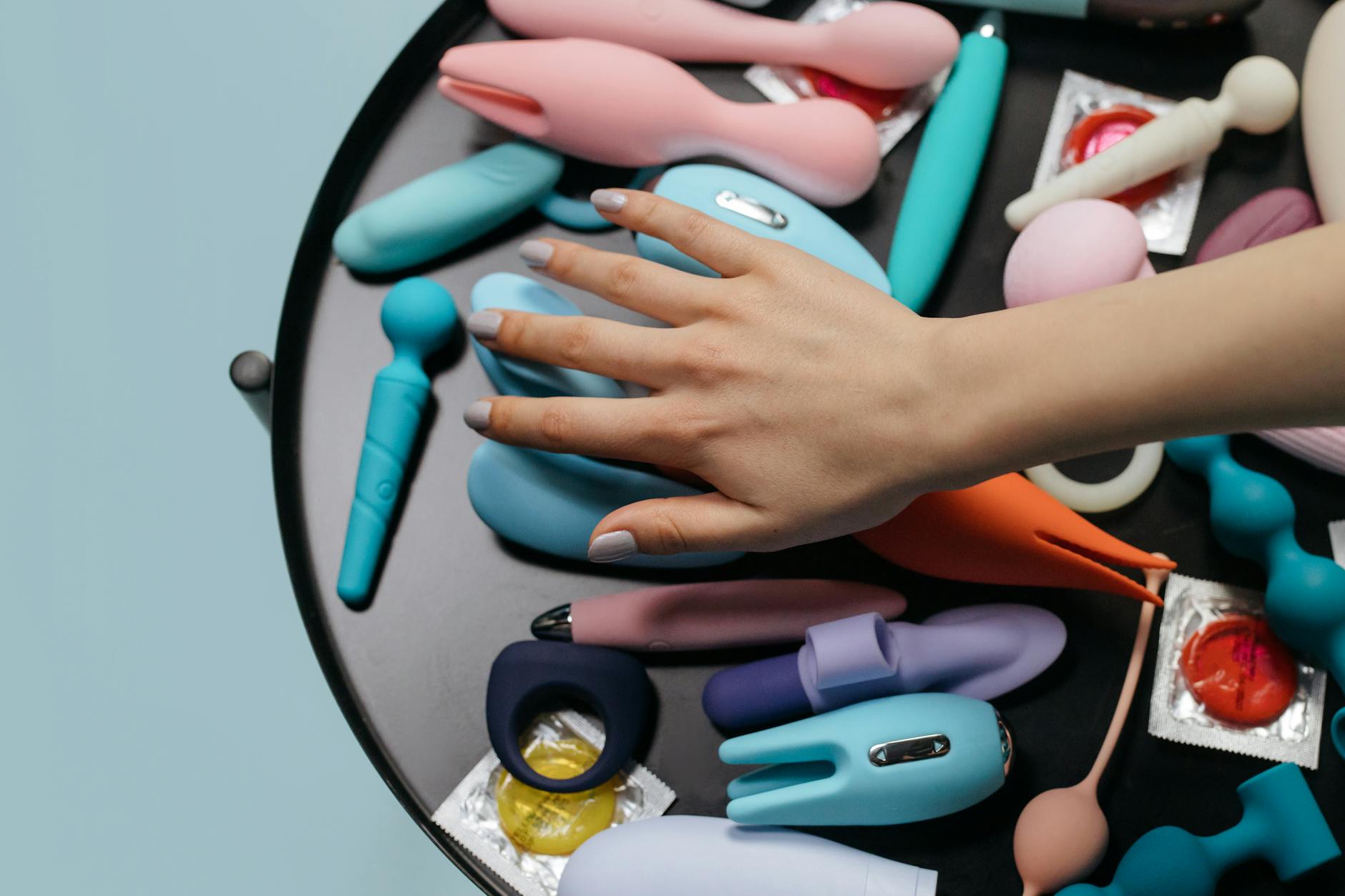
Let's be real about the elephant in the room
Choosing a vibrator as a couple is one of those deceptively simple tasks that reveals how much you actually don't know about each other. One of you wants intensity. The other wants precision. One partner is thinking about solo use, the other about partnered play. And somewhere in that gap lives either a device that collects dust or one that becomes your favorite shared secret.
I've watched countless couples approach this moment with either excessive caution or reckless enthusiasm. Both strategies bomb. What works is treating the decision like you'd handle any other intimacy negotiation. Communication first. Compromise second. The actual lemon vibrator selection third.
The conversation you need to have before shopping
If you've never discussed pleasure preferences with your partner, a lemon clitoral vibrator purchase is actually a gift. It forces the conversation. Here's what to talk through:
What's the intended use? Will this be for solo exploration, partnered play during sex, or both? The answer changes everything. A lemon vibrator like the Lem is exceptional for partnered use because the handle gives your partner control and clear sightlines. But if one of you wants solo time with it too, that matters. Make sure both of you feel comfortable with that.
Sensitivity and intensity aren't one scale. Someone might love intensity but need low intensity to start. Someone else might prefer gentler patterns but want the clitoral suction approach over traditional vibration. Don't assume they're the same thing. Ask directly. "When you think of your ideal sensation, what comes to mind?" Listen to the actual answer instead of projecting your own preferences onto it.
Power source and logistics. Does one of you travel frequently? Does one of you prefer rechargeable because of the environmental angle or because replacing batteries feels annoying? These practical preferences matter more than people admit. If one partner wants USB rechargeable and the other doesn't care, that's not a negotiation. That's just an easy yes.
The pleasure-performance gap. Here's where couples most often stall. One partner thinks the vibrator is purely functional. The other sees it as intimate. Neither is wrong. But if you don't name that difference, one of you will feel hurt when the device is treated casually and the other will feel weird about the emotional weight placed on an object. Acknowledge both perspectives before you buy.
Understanding different sensitivity levels
One of the most common mismatches in couple vibrator selection happens because partners have genuinely different nervous systems. This isn't a problem. It's just information you need.
Some people experience vulvar sensitivity as a feature. Meaning the more reactive their tissues are, the easier strong sensation feels pleasurable. Other people experience that same sensitivity as a bug. They find anything above a certain intensity threshold uncomfortable or even painful. Neither person is wrong. They're just wired differently.
Lemon clitoral vibrators, especially suction-based options like the Lem, are actually quite good for sensitive users because suction creates a broader, less focused sensation than a traditional vibrator. But the intensity settings still matter. If one partner needs settings 1-2 and the other loves settings 4-5, you have options. Some lemon vibrator models have wide intensity ranges. Others are more limited.
Here's the key question: "If we buy something with five settings, could you both find at least two that feel good to you?" If the answer is no, you might need two separate devices. That's not a failure. That's honesty.
Material and comfort compatibility
Lemon vibrators are typically silicone, which is excellent for vulval health and easy to clean. But vulvar tissues are surprisingly particular. Some people find silicone slightly sticky. Others prefer it to glass or stainless steel because it warms to body temperature more quickly.
If one partner has a latex sensitivity or a general sensory preference for certain textures, that's worth discussing before purchase. Most Hello Nancy lemon vibrators use body-safe silicone, but confirming that both of you are comfortable with the material prevents surprises.
Also consider the noise level. If you live with other people or one partner is more privacy-conscious than the other, this matters. Quieter lemon vibrators tend to use different motor designs, and that can affect how the sensation feels. You might need to pick something slightly less quiet than ideal to hit the intensity marks you both want.
The feature negotiation
Lemon clitoral vibrators come with different bells and whistles. Some have app control. Some have multiple pattern options. Some focus on pure suction with minimal complexity. Some are whisper-quiet. Some have longer battery life.
Make a list. Not a fantasy list of every possible feature, but the five things that actually matter to each of you. Then find the overlaps.
Example: Partner A cares about intensity range and noise level. Partner B cares about ease of cleaning and battery life. You don't need a device that's extraordinary at all four. You need one that's genuinely good at all four and exceptional at maybe one or two.
If Partner A is intensity-focused and Partner B is anxious about mess or maintenance, this reveals something useful. The anxiety is often the real blocker, not the feature itself. Address it directly. "What would make cleanup feel manageable to you?" is a better question than "Which vibrator has the best suction pattern?"
Budget alignment (the conversation nobody wants to have)
Lemon vibrators range from around $60 to $90 depending on features. For a shared device, that's a meaningful purchase. If one partner casually assumes this is a $20 decision and the other is thinking $89, that's a friction point worth addressing.
Be honest about what each of you thinks is reasonable to spend. If there's misalignment, name it. "I'm willing to spend up to X. Are you comfortable with that, or does that feel like more than you want to invest right now?" This is a genuine conversation, not a negotiation where someone "wins."
Sometimes the answer is that you pick something in the middle that neither of you absolutely loves but both of you can enjoy. That's often the reality of shared purchases. Sometimes it means you agree to invest a bit more because the features are genuinely worth it. Sometimes it means you wait and save. All of these are fine outcomes.
Picking the actual device
Once you've talked through all of that, the selection gets easier. You're not choosing based on marketing or reviews from strangers. You're choosing based on what you and your partner actually need.
Look at intensity range first. If one of you needs a wide range, that's the non-negotiable. Noise level second. If privacy matters to either of you, that's not negotiable either. Then features. Patterns, app control, whatever else, in order of actual importance.
If you're torn between two options, pick the one with better intensity range. More options almost always wins in partnered devices because you can use a lower setting and still feel good. You can't add intensity that isn't there.
If neither of you has ever used a lemon clitoral vibrator before, consider starting with something versatile rather than hyper-specialized. The Lem is an excellent choice because it offers both suction and pattern variety, handles solo and partnered use gracefully, and has a wide enough intensity range that most people find their sweet spot. But Hello Nancy makes other excellent lemon vibrator options too. The point is to pick something that's good at multiple things rather than perfect at one thing.
After you've bought it
The selection doesn't end the conversation. In fact, it begins a new one. After your first few experiences together, check in. "How is this feeling? Do you want to keep exploring with this, or do we need something different?"
Pleasure preferences shift. Sensitivity changes. Bodies adapt. What felt perfect in month one might feel slightly off in month three. That's normal. It doesn't mean you picked wrong. It means you're learning together.
Many couples find that having a shared device actually opens up conversations they'd never had before. You start talking about sensation. About speed and pattern preference. About what feels intimate versus what feels clinical. About vulnerability and desire. Suddenly the vibrator is less about the device and more about the permission it gives you to explore together.
That's the real win.
FAQ: Choosing a lemon vibrator with your partner
What if we have completely different sensitivity levels?
Completely different is actually more manageable than moderately different because you know you need options. Look for lemon vibrators with a wide intensity range (ideally 5+ settings). Test the low settings together. Many couples find they're both happy at mid-range intensities even if their absolute preferences diverge. If that doesn't work, consider having one shared device for partnered use and potentially separate devices for solo exploration. That's not failure. That's honesty.
Should we buy a device together or is one partner supposed to surprise the other?
Buy it together, full stop. A surprise intimate device sounds romantic in theory and creates actual awkwardness in practice because you haven't discussed any of the things in this article. Choosing together is foreplay. It opens conversations that deepen intimacy far more than a surprise ever could. Plus you avoid the 40% chance of picking something one of you hates.
What if one partner is nervous about using vibrators?
That nervousness is information, not a blocker. Address it directly. "What specifically feels uncertain?" Often it's not about the device itself. It's about feeling replaced, or worried about dependency, or exposed. These are relationship conversations disguised as sex toy questions. Have the relationship conversation first. Then the device selection often feels much simpler. If you need guidance navigating this, <a href="/blog/how-to-use-lemon-vibrator-for-first-time-anxiety">here's a full breakdown on easing into vibrators when you're nervous</a>.
Can a lemon vibrator improve a struggling intimate life?
No. A device can enhance something that's already working. It can add novelty and pleasure. But it can't fix communication problems, resentment, or mismatched desire. If your intimate life is struggling, that needs attention first. A vibrator purchased to fix that becomes a source of frustration instead. Do the relationship work. Then add the toy.
How do I know if we're choosing the right one?
You're choosing the right one if both of you can articulate why you picked it. "I like the intensity range" plus "I like that it's quiet" is solid. "I don't know, the website looked nice" is not. Also, if you're both saying yes to it with genuine enthusiasm rather than settling, you're on the right track. Enthusiasm matters more than specs.
What if my partner doesn't want to use the vibrator with me?
Then you have a partnership conversation, not a vibrator problem. Why doesn't he want to? Is it anxiety? Is it misaligned desires? Is it that he feels replaced or judged? These are real relationship questions that need real conversation. Sometimes the answer is that you use it solo and your partner loves pleasuring you without the device. Sometimes it means working through some stuff about bodies and pleasure together. Either way, the vibrator isn't the issue. The disconnect is.